
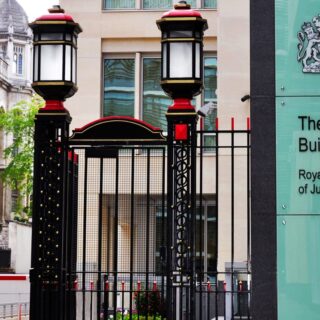
The prinicple of open justice is integral to our justice system – this means that members of the public are able to visit courts, sit in the public gallery and observe proceedings (or observe a hearing remotely, using a video or audio link). There are some exceptions – on occasion the judge may rule a case (or parts of proceedings) be heard privately to protect privacy, confidentiality or public security. Where possible these cases will be opened to specific individuals, e.g. journalists in order to ensure transparency.
As a student, attending court will give you insights into procedure, advocacy and the roles that legal professionals take. If you are already really enthusaistic about a particular area of law academically, this will also give you a chance to see how things play out in practice.
How do I find out what cases are lined up at specific courts?

The courts are responsible for publishing lists of what cases will be heard each day. These will be released each day but are subject to change. Use the ‘Find a court’ service to track down these daily cause lists. The list will show the cases scheduled, case and hearing type, whether it is in person or a video hearing and also an estimation of duration.
You might wish to do this at a court near your home, or perhaps one of the bigger courts in central London.
Have a think about the type of cases you’d like to see – for example, if your prime interest is commercial law, you might like to look at the daily cause list for the Business and Property Courts: Rolls Building. If it’s criminal law that interests you then you can find lists in a number of places (The Law Pages, CourtServe (look for Central Criminal Court, but you have to register to use) or Old Bailey Insight and Legal London). CourtServe is also a good starting point for seeing what is happening at the Royal Courts of Justice if you want to see something there (remember this is High Court and Court of Appeal). UK Supreme Court listings all appear on their website.
What about watching online?
Some or all of proceedings at the following courts are streamed online:
You can also ask permission to observe remotely from the relevant court. Details of how to do this will appear on the daily cause list (usually an email or phone call to the court). The judge hearing the case will decide if it is appropriate for you to observe remotely. They will have regard to the interests of justice, the technical capacity for remote observation and what is necessary to secure the proper administration of justice.
Are there rules in place to visit a court?
Yes, it won’t be a suprise to learn that there are various security protocols (for getting into the building in the first place), rules about what you cannot do within the courtroom and also courtroom etiquette. Find out full details on the gov.uk advice page on ‘How you can attend or access courts or tribunals’, but key points summarised below.
Security

You are likely to undergo a full security check of you and your belongings. Therefore do think carefully about what you take with you, and also leave good time (15-30 mins) before the case starts so you have time to clear all these security procedures.
Courtroom rules
You won’t be able to take photos, audio or video recordings within the court. You won’t be able to transmit information about the hearing as it is going on (e.g. via social media, email) without prior permission from the judge or magistrate. You won’t be able to eat or drink. You can take your mobile or laptop into court but it must not disrupt proceedings so should be off or on silent. There is no permission needed to take written notes. Not adhering to some of these may be considered contempt of court.
Courtroom etiquette
You will need to stand when the judge or magistrates enter or leave the courtroom. A member of court staff will give a verbal alert of this too.
Hopefully this has inspired some of you to give this a go – get in touch with Emily (editor) if you’d like to share your experience with Lawbore readers.