
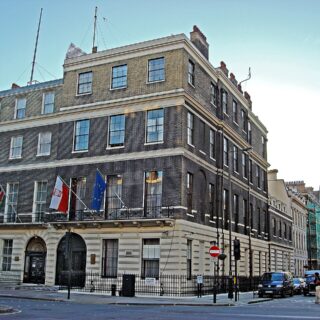
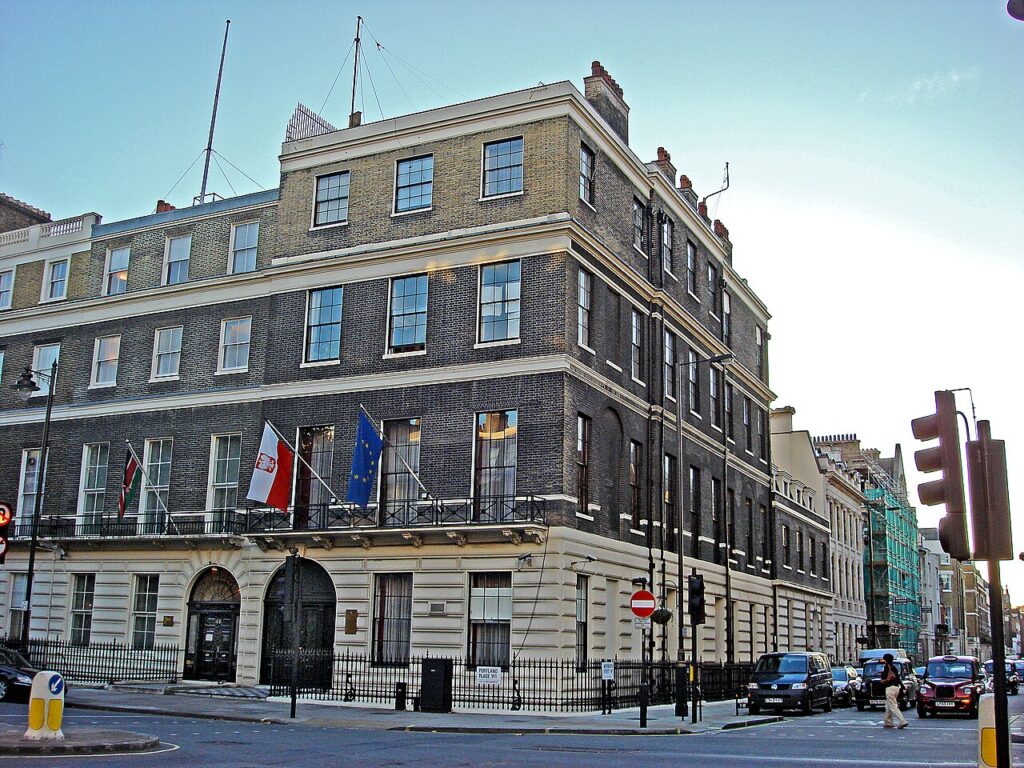
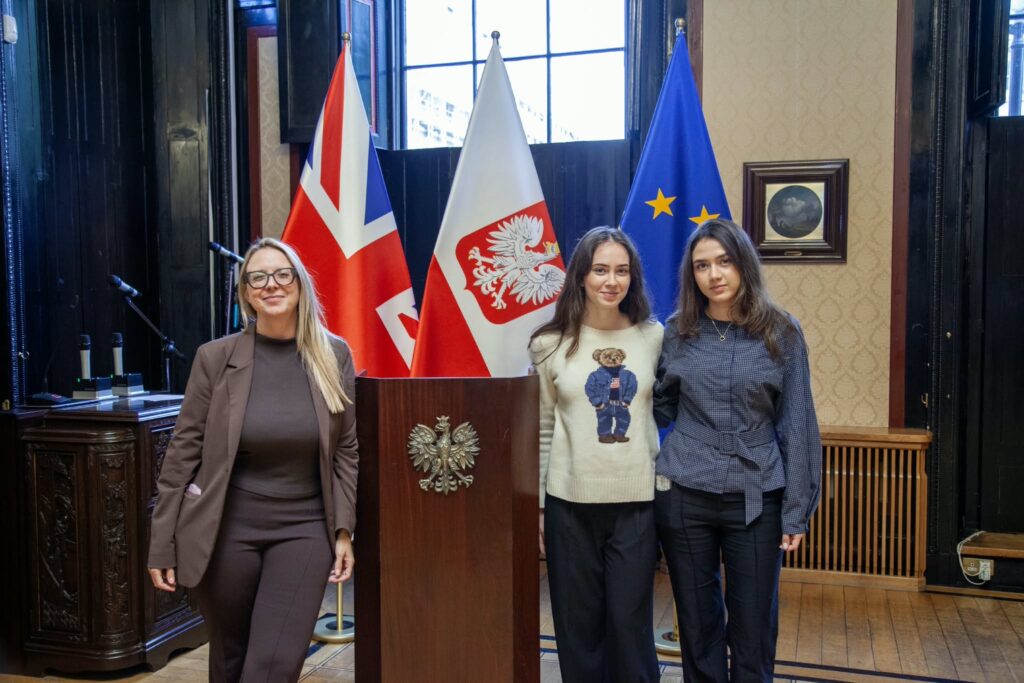
When we imagine a career in Diplomacy, our minds think of international travel, political negotiations and the opportunities to meet significant individuals. However, the personal commitment that comes with representing a country is less known. As part of the European Union Society at City, St George’s, we had the opportunity to visit the Polish Embassy at 47 Portland Place in London. The event offered an insight into the history of the building and the experiences of those working within the diplomatic service, revealing much more than what we see from the outside.
History
The event began with an exploration of the Polish Embassy building’s history. Located at 47 Portland Place, the Georgian-style building has played an important role in Poland’s diplomatic presence in the United Kingdom. A significant part of its history is its connection to the Second World War, when it served as the headquarters of the Polish Government-in-exile at a time when the country was under Nazi occupation.
Diplomatic role
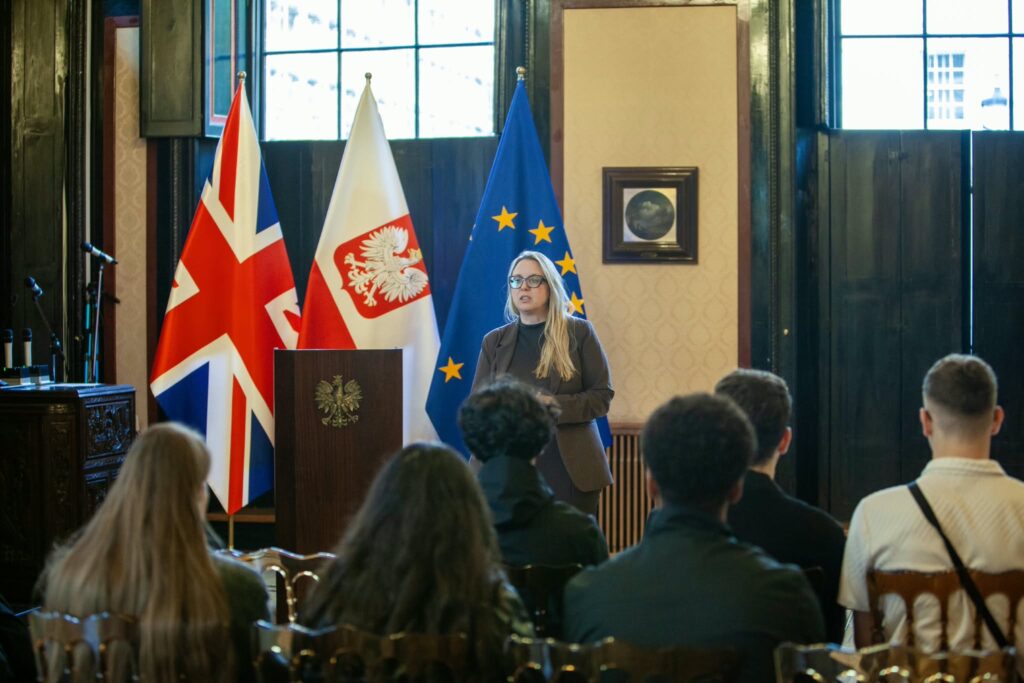
After the historical discussion, the focus shifted to the experiences of diplomats. This was interesting because it offered an opportunity to understand the profession from a personal perspective, rather than simply focusing on its formal events and international meetings.
Katarzyna Pełczyńska-Nałęcz detailed the demanding nature of diplomatic work, explaining how the role involves a high volume of work alongside multiple responsibilities. One aspect that stood out was the job’s unpredictability. We were told that diplomats may need to cancel plans at short notice if a minister visits, or an important diplomatic commitment arises.
This highlighted how difficult it can be to maintain a clear boundary between professional and personal life. Unlike careers where working hours and responsibilities may be more predictable and consistent, diplomatic work can require individuals to remain flexible and available as circumstances change. This challenged the common perception of diplomacy as a career focused mainly on international travel and events.
Pełczyńska-Nałęcz was Poland’s Ambassador to Russia (2014–2016) and until recently, served as Poland’s Minister of Development Funds and Regional Policy.
Personal Side of Diplomacy
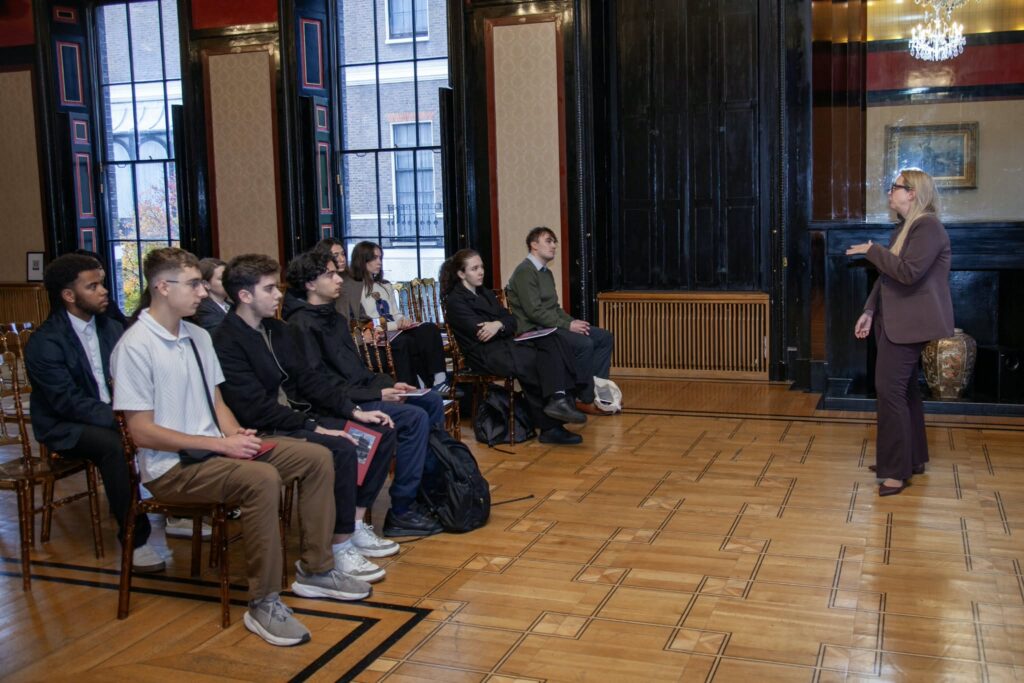
The most interesting part of the discussion was hearing about how the profession can affect diplomats’ personal lives. The speakers discussed the difficulties of maintaining a social life while regularly relocating between different countries.
Although moving abroad provides opportunities to experience different cultures, meet new people and develop new perspectives, it can also make maintaining long-term relationships and friendships challenging. Having to move regularly can make it difficult to build a sense of stability, as individuals are often required to leave behind familiar surroundings and rebuild their lives elsewhere.
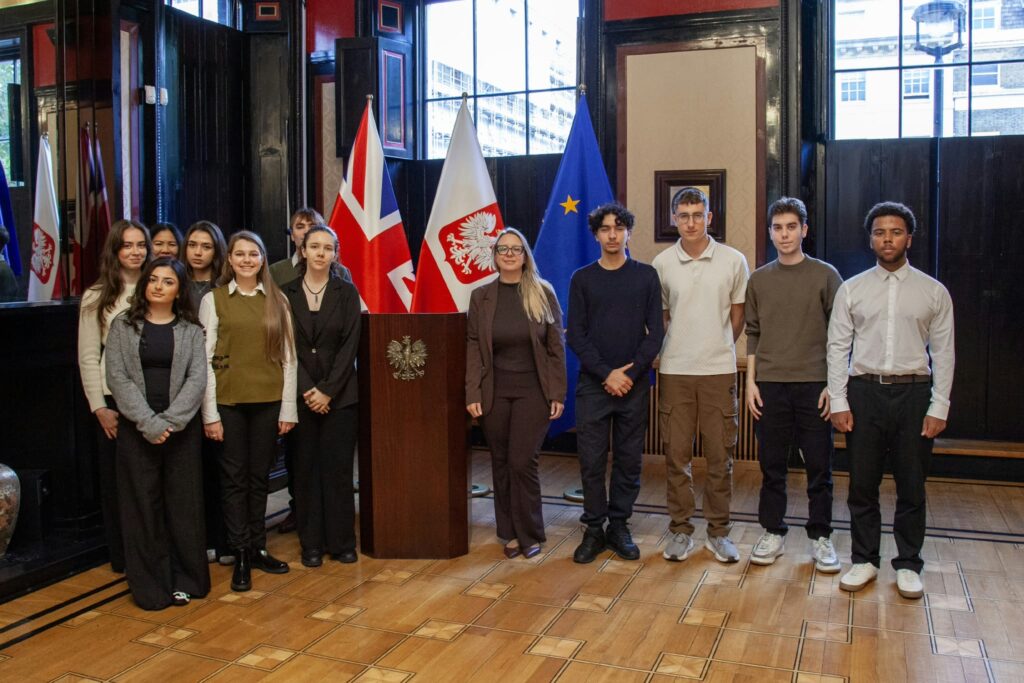
I found this particularly interesting because international travel is often presented as one of the most attractive aspects of diplomacy. However, hearing about the personal challenges offered a more balanced perspective, and gave me pause for thought. It seems that the opportunity to live and work in different countries does not necessarily come without sacrifices. Maintaining friendships and relationships can become difficult when professional commitments and international relocations shape everyday life.
It made me consider how, although individuals represent their countries internationally, they must also navigate the personal challenges that come with living between different places. The profession therefore requires not only political awareness and communication skills, but also adaptability and flexibility.
Overall

Overall, the visit to the Polish Embassy offered a valuable insight into both the historical significance of diplomatic institutions and the experiences of the people working within them. What stood out most to me was the contrast between the prestige often associated with diplomacy and the personal commitments required behind the scenes.
The event encouraged me to look beyond the traditional image of a diplomat and recognise the realities of a profession that can shape almost every aspect of an individual’s life. It showed that diplomacy is not simply about representing a country abroad but also about the people who dedicate their time and personal sacrifices to maintain international relationships.
I left with a greater appreciation of the work involved in diplomatic representation and a better understanding of what it really means to pursue a career in diplomacy.
Interested to find out more? Grey Area has a piece on ‘What does a diplomat actually do?’ and the Foreign, Commonwealth and Development Office has a snapshot of a week as an Ambassador (‘Tea with everything: A diplomatic week’), from Sian Macleod, who was at the time of writing the piece (2019) the Ambassador to the Republic of Serbia.