
The views and opinions expressed herein are those presented by Professor Clive Stafford Smith and should not be interpreted as reflecting the views or beliefs of the author. This account is intended solely as a summary of the lecture.
On 5 November 2026, I attended a talk given by Professor Clive Stafford Smith on the forgotten prisoners of Iraq and Syria.
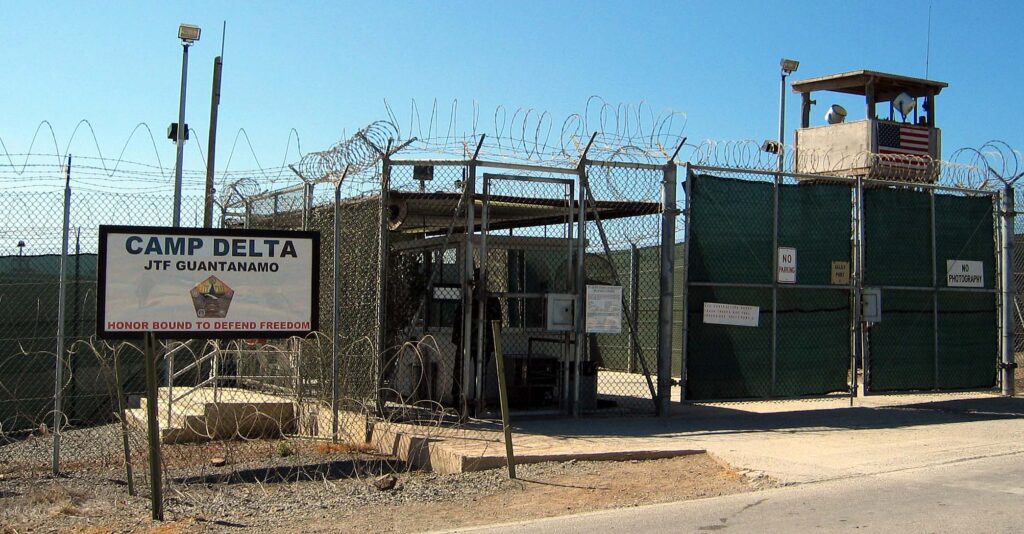
Stafford Smith set out that when the world thinks of the excesses of the War on Terror, one prison usually comes to mind: Guantánamo Bay.
For decades, Western politicians condemned Guantánamo as a betrayal of the very values the US claimed to defend. British ministers denounced it; European leaders criticised it and human rights lawyers loudly challenged it in court.
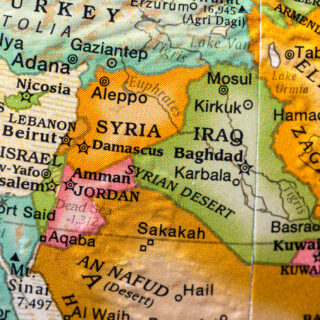
Yet, according to human rights lawyer and campaigner Professor Clive Stafford Smith, an even larger and less scrutinised detention crisis now exists thousands of miles away, stretching across northeast Syria and into Iraq, and many of the governments that once criticised Guantánamo are now among its architects.
Fresh from a visit to Baghdad, Stafford Smith described a system of imprisonment he believes eclipses Guantánamo in both scale and complexity. Thousands of detainees, many of them never formally charged with a crime, remain trapped in a legal limbo that has persisted long after the territorial defeat of ISIS.
But unlike Guantánamo, almost nobody is talking about it.
At its peak, Guantánamo Bay, a rough 12,782km away from the battlefields of Afghanistan, held around 780 detainees from 46 countries. Stafford Smith explained how these detainees eventually benefitted from teams of up to 500 military and civilian lawyers, often backed by major law firms. This meant that at certain points, there were 12+ US military lawyers on each case at one time, and the US was giving around 11.8 million US dollars per prisoner per year.
The Syrian Iraqi detention system, by contrast, involves more than 5,704 prisoners from over 66 countries. Many have been transferred from detention camps in northeast Syria to Iraqi prisons where they face prosecution in a system already strained by decades of conflict. In Iraq, Stafford Smith is one of three pro-bono lawyers assisting the 100 Iraqi lawyers available to aid these prisoners. This vastly uneven ratio means many are yet to receive meaningful legal representation. What is even more striking is that thousands face capital trials, and heartbreakingly, many of these detainees are children.
For Stafford Smith, the issue is not merely one of justice, but of capacity. Iraq, after decades of war and instability, has inherited a problem largely created by international powers.
So how did this come about?
In the view of Stafford Smith, the story begins with the collapse of ISIS.
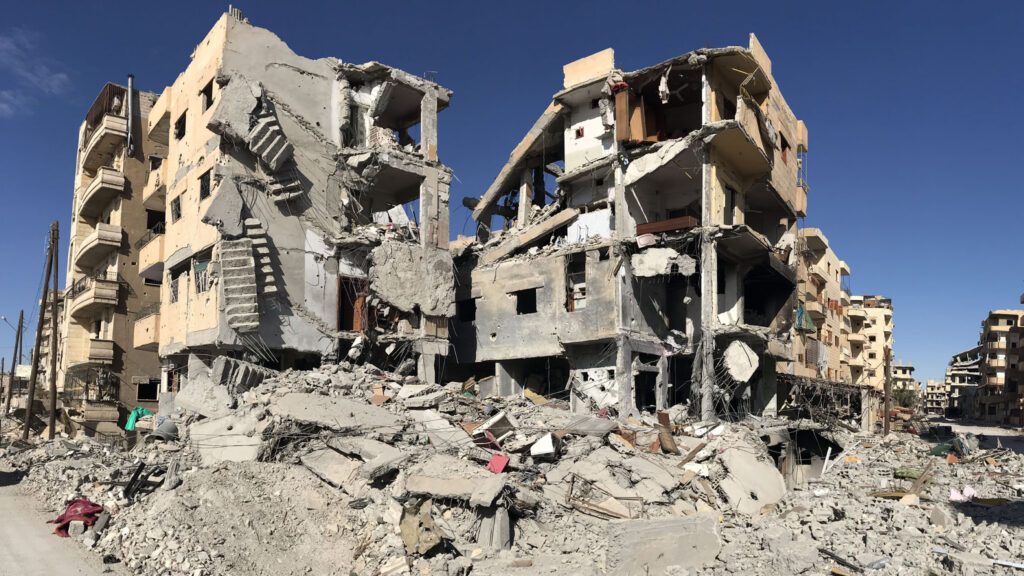
As the so-called caliphate disintegrated and the Syrian Democratic Forces rose, tens of thousands of people flooded into camps controlled by Kurdish forces in the relatively autonomous, semi-protected region of northeast Syria. Many were swept up during the collapse of ISIS territory. Although this included ISIS fighters, many were wives, children, aid workers, doctors, trafficked teenagers and civilians with no connection to ISIS, yet all trying to escape zones of civil war. The situation became even more precarious as Syria entered a new period of uncertainty following the weakening and subsequent collapse of former President al-Assad’s regime in 2024. For about a decade, men, women and children have been confined in camps and prisons across northeast Syria. Among these detainees were individuals from dozens of countries, including Britain, Australia, Canada, Germany, France, Suriname, Sudan, Sweden and the United States.
What happened next, Stafford Smith hails as an extraordinary abdication of responsibility. Countries that routinely lecture the world on human rights, he argues, chose political convenience over principle.
While some detainees have escaped or fled, many remain unable to return home because their countries have stripped them of citizenship, revoked passports or simply refused to repatriate them. This has resulted in a stateless population trapped between governments that do not want them and regional authorities that lack the resources or legal infrastructure to deal with them. Western governments, Stafford Smith says, upon discovering that there were few votes to be won by defending the rights of those associated, however indirectly, with ISIS, chose to abandon their nationals abroad.
Put simply, thousands of people remain trapped in legal limbo because bringing them home would be politically unpopular.
European governments condemned America for Guantánamo yet when confronted with their own version of the same dilemma, many adopted an even simpler solution: leave the problem somewhere else.
In a departure from normal character, Donald Trump repeatedly urged allied governments to take back their citizens from Syrian camps. The irony of a US president – not generally associated with humanitarian principles – urging repatriation while supposedly rights-respecting European governments dug in their heels is difficult to ignore. However, before we all changed our mind about Trump, Stafford Smith was quick to remind the audience this is still the same nation which helped create the conditions for the crisis through years of military intervention and then left regional authorities to manage the consequences.
Stafford Smith even went as far as to argue that Britain continues to allow British nationals to languish in foreign prisons, often under conditions that would never be tolerated at home.
Stafford Smith highlighted the case of Jack Letts, nicknamed “Jihadi Jack” by the British media.
Letts is a British-born man who has spent almost a decade behind bars without trial. Britain, the country of his birth stripped his citizenship; Canada, the country whose passport he retains has also failed to bring him home. Stafford Smith used this case to expose what for him is the uncomfortable reality at the heart of the post-ISIS detention regime: for some Western governments, exile has become a substitute for justice.
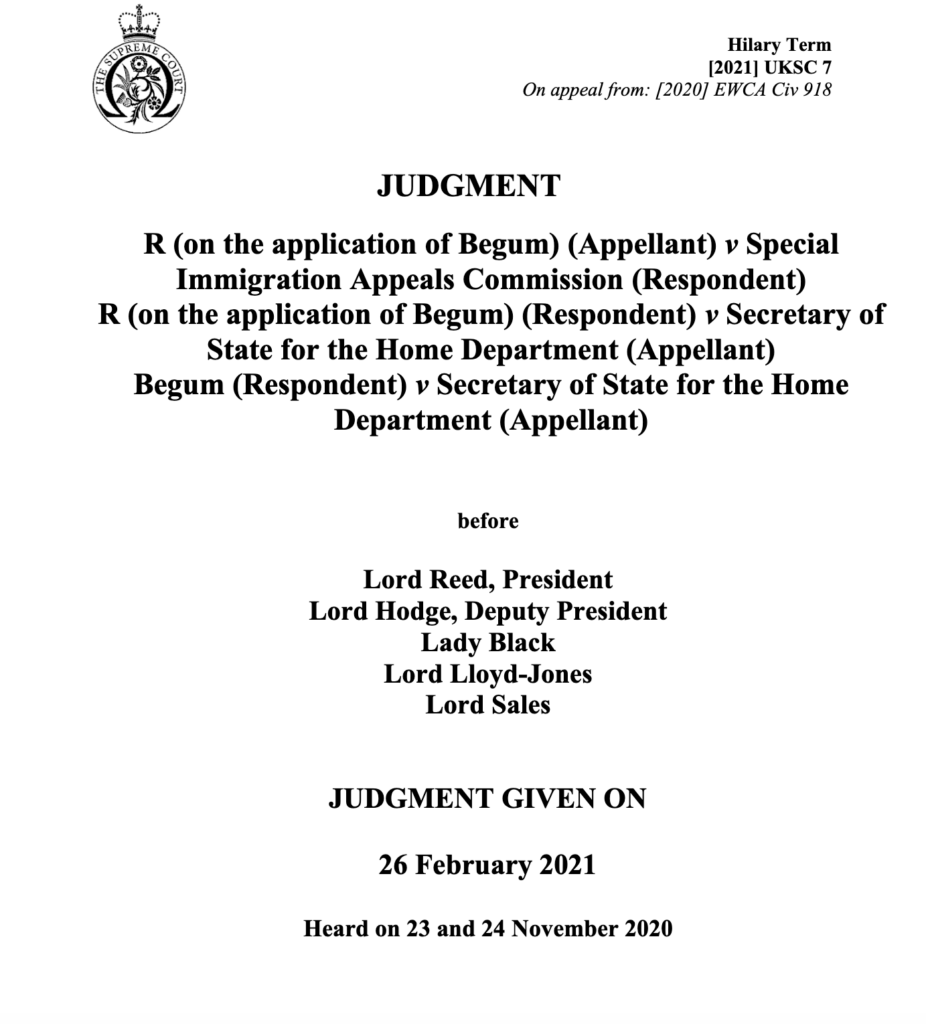
Another controversial example Stafford Smith mentioned was Shamima Begum, allegedly trafficked from London to join ISIS at the age of fifteen. Rather than repatriating her and allowing British courts to decide her fate, Britain revoked her citizenship, effectively ensuring she would remain stranded abroad. The British government’s position framed this outsourcing of justice as protecting national security. But, Stafford Smith contends, this was not a security strategy but a political one.
The children no one wants
What the case of Shamima Begum highlighted lay at the crux of Stafford Smith’s lecture, the devastating consequences such political inertia has on children.
According to figures cited by Stafford Smith, more than 500 prisoners currently held are still considered juveniles. Iraqi authorities classify anyone who entered northeast Syria before the age of eighteen as a juvenile, meaning as many as 1,500 detainees (more than a quarter of the entire prison population) fall into that category. Many, some young enough to still be in primary school, were taken to Syria by parents. Others were simply born there.
The question Stafford Smith repeatedly asks is devastatingly simple:
What crime exactly are these children supposed to have committed?
Stafford Smith relayed the story of Yusuf Zahab, an Australian citizen, reportedly taken to Syria by his parents as a child. After becoming trapped by the conflict, he eventually reached Kurdish-controlled territory, only to be detained and imprisoned. He spent years in prison and, despite still being a juvenile at the time of his detention, now faces the prospect of adult criminal proceedings.
Another case concerns Stefan Uiterloo, reportedly taken from his father and brought to Syria by his mother when he was only eleven years old. According to Stafford Smith, he was later abandoned to survive on the streets before eventually ending up in Kurdish custody. His rescue became a lesson in bureaucratic absurdity. Despite Suriname’s best efforts, the country’s attempts to get Stefan home appeared rather futile. Suriname had no embassy in Baghdad and visa issues stalled efforts to secure his release. Eventually Stafford Smith and his colleagues found relatives, arranged emergency documentation and even purchased his plane ticket themselves because the government could not afford it.
Stafford Smith was keen to emphasise how one of the world’s poorest states ultimately did more for a stranded child than some of Europe’s wealthiest democracies.
“Unfinished business”
Nearly a decade after ISIS lost most of its territory, their defeat removed the issue from the headlines and the world largely stopped paying attention. But people left behind are still paying the price.
For Stafford Smith, this is not simply a Middle Eastern problem. It is an international problem created by international decisions and sustained by international indifference. He describes it as “unfinished business”: a test of whether democratic societies remain committed to the rule of law even when dealing with those they fear most.
And until those questions are answered, the “Guantánamo on the Euphrates” will remain one of the least discussed human rights dilemmas of the post-ISIS era. Stafford Smith warns how history may judge the West’s response, not as a triumph of security policy, but as one of the most embarrassing and morally compromised chapters in its modern human-rights record.
Whilst some of Professor Stafford Smith’s views are clearly contentious, and I personally have neither the knowledge nor the experience to challenge them, his talk made for a troubling and thought-provoking evening.
All of Stafford Smith’s lectures for Gresham College are available to watch (he became a Gresham Professor of Law in 2024). If you’d like to watch this specific lecture yourself, you can do: