
Earlier last year, I had the privilege of being awarded the Inderpal Rahal Memorial Trust 2025 Award, an opportunity I first discovered through this very platform, Lawbore. At the time, I could not have anticipated just how meaningful this award would become to me not only in practical terms, but in how it would shape my confidence, outlook, and sense of belonging within the legal profession.
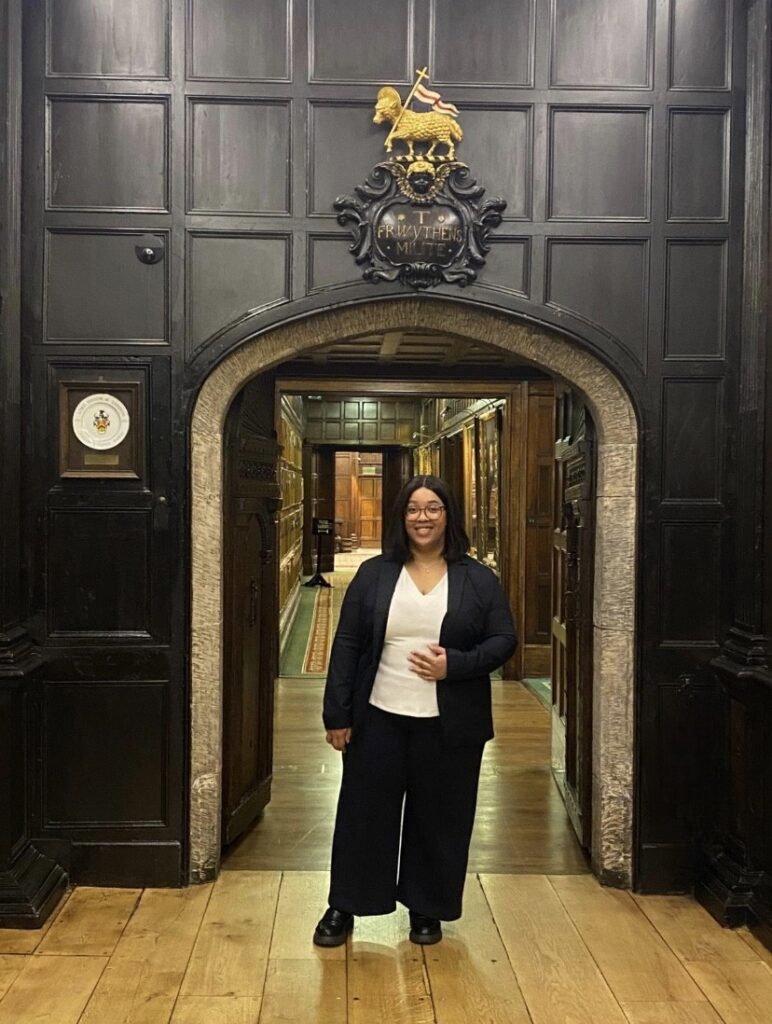
The award holds deep personal significance, not simply because of the financial support it offered, but because of what it represents. It is aimed at female aspiring lawyers from immigrant backgrounds – individuals who often navigate the legal profession while carrying additional social, cultural, and structural barriers. As a Black woman whose family descends from the Windrush generation, this focus resonated deeply with me. It was affirming to encounter an opportunity that did not require me to separate my identity from my ambition but instead recognised that the two are often inextricably linked.
For many aspiring lawyers from underrepresented backgrounds, the path to the Bar can feel isolating. The profession is steeped in tradition, and while progress has been made in recent years, systemic barriers remain. Financial pressures, lack of representation, and limited access to informal networks can all contribute to a feeling that the profession was not designed with people like us in mind. Against this backdrop, the existence of an award that explicitly acknowledges these realities felt both validating and empowering.
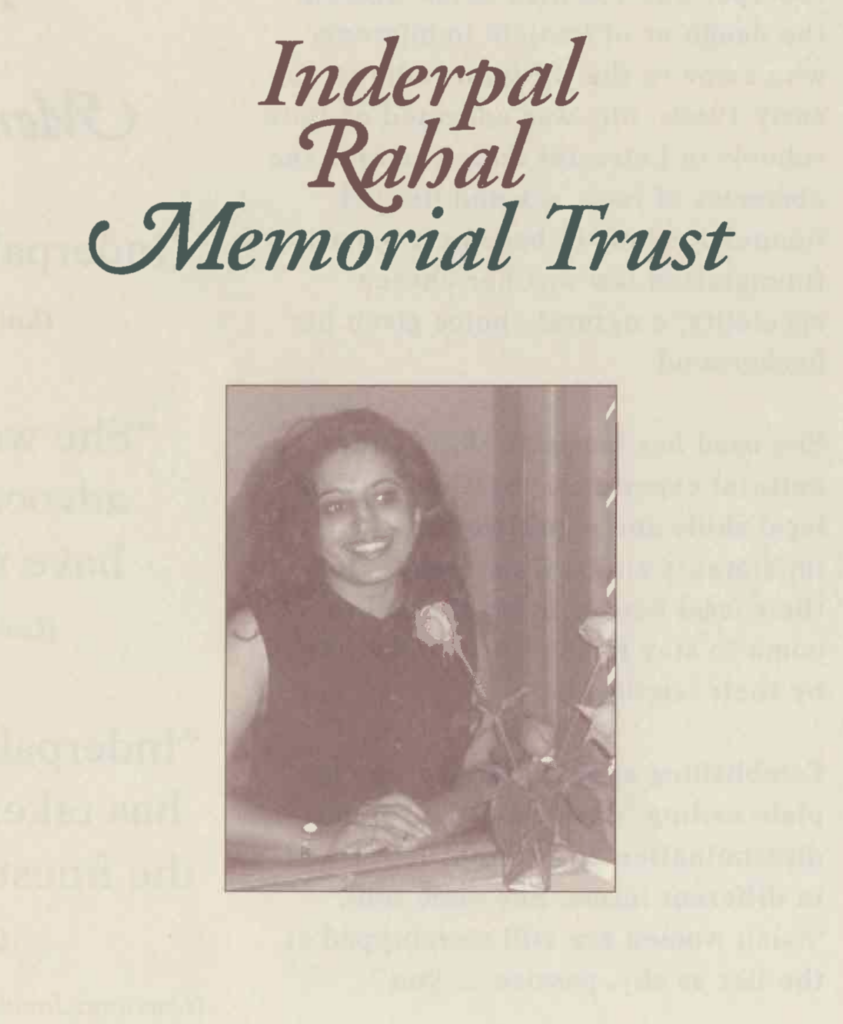
What made the award even more meaningful was learning about the woman whose name it bears. Inderpal Rahal was a barrister who overcame significant barriers to pursue a career at the Bar. Here is a brief rundown of an extraordinary but short life (thanks to the Inderpal Rahal Memorial Trust for this detail):
She was a British Asian woman, the daughter of Punjabi immigrants who came to the UK from India in the early 1960s. She was educated at state schools in Leicester and overcame the obstacles of race, sex and limited financial means to become a barrister. Immigration law was her chosen speciality, a natural choice given her background.
She used her language skills and cultural experience together with her legal skills and expertise to help immigrants and asylum-seekers in their legal battles to be allowed to stay in the UK or be joined by their families there.
Her journey, marked by resilience and determination, reflects the experiences of many women who have had to work tirelessly to carve out space for themselves in a profession that has not always been welcoming. Following her tragic passing in 1997, this award was established in her memory, not merely as a tribute, but as a living legacy designed to support women facing similar challenges.
To be a recipient of an award named after such an inspirational woman is a profound honour. It carries with it a sense of responsibility to recognise the struggles that came before me, and to contribute, in whatever way I can, to making the profession more accessible for those who will follow. Receiving the award was not simply a moment of celebration; it was a reminder that my journey is part of a broader narrative of perseverance, representation, and change.
Beyond the financial support that has enabled me to continue my Bar studies, the award has provided something just as valuable: a renewed sense of purpose. The Bar course is demanding, both academically and emotionally. It requires resilience, self-belief, and a willingness to persist even when confidence wavers. Knowing that my potential had been recognised and invested in gave me reassurance during moments of self-doubt and reinforced my commitment to seeing this journey through.
The award has also prompted me to reflect more deeply on the kind of barrister I aspire to become. I hope to build a strong and meaningful practice, grounded not only in legal competence but in empathy, integrity, and perseverance. Representation matters, not only in terms of who enters the profession, but in how those individuals practise once they are there. Carrying forward the legacy of Inderpal Rahal means striving to embody the values of resilience and determination that defined her career.
I am also deeply grateful to Lawbore for sharing this opportunity. Platforms like this play a crucial role in widening access to the profession by ensuring that students are informed about opportunities they may otherwise never encounter. Information is powerful, and access to information can be transformative. For many students, particularly those without established legal networks, discovering an opportunity at the right moment can be the difference between applying and never knowing it existed at all.

Applying for awards, scholarships, or opportunities can often feel daunting. The legal profession is highly competitive, and it is easy to become discouraged when you consider how many capable, intelligent, and deserving candidates may also be applying. Self-doubt can be loud. You may question whether your achievements are enough, whether your experiences are relevant, or whether your voice belongs in the space you are trying to enter.
I certainly experienced these doubts myself. Like many students, I hesitated before applying. It can be tempting to convince yourself that success is unlikely, or that an opportunity is better suited to someone else. But my experience has taught me an important lesson: you never truly know what is possible unless you take that leap. You may assume that the odds are against you, but you might just be the one.
Choosing to apply is, in itself, an act of courage. It is a decision to believe. Even when the outcome is uncertain, applying ensures that you are not excluded by default. It is always better to try than to look back wondering what might have been. Opportunities do not always announce themselves as life changing moments. Sometimes they appear quietly, as a link on a website or a short description in a student platform. Their impact, however, can be profound. The opportunity that changes your path may begin with nothing more than the decision to step forward and trust that you belong in the room.
If there is one message, I hope readers take from my experience, it is this: do not underestimate yourself. Take the leap, even when confidence feels fragile. Apply, even when doubt tells you not to. You never know where that single decision might lead.
Keep a close eye on the Lawbore Opportunities section for news of awards, prizes, scholarships and more…we’ll also flag them here on Lawbore Future Lawyer. Big thanks to Zarreena for putting together this piece on the Inderpal Rahal award and what it meant to her.
Zarreena McKenley-Osbourne is currently studying the Bar Vocational Studies (BVS), with a particular interest in medical law and negligence. She is passionate about legal writing and academic research, especially where the law has a meaningful impact on people’s lives.