

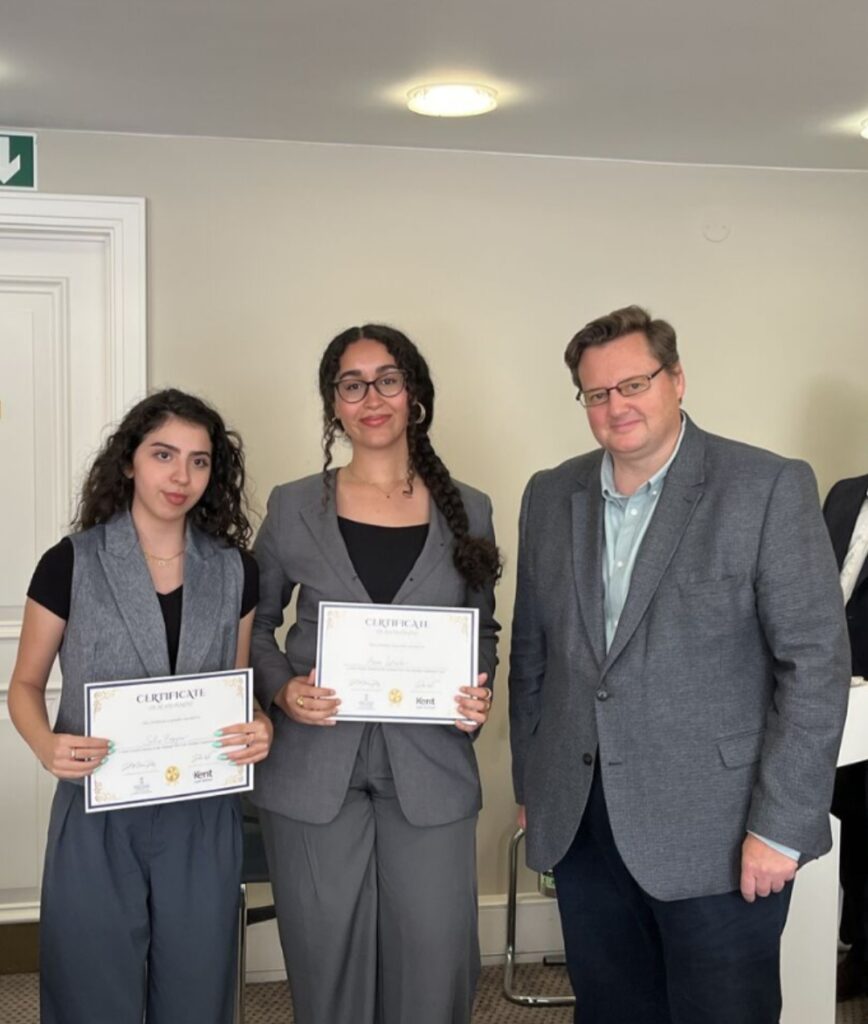
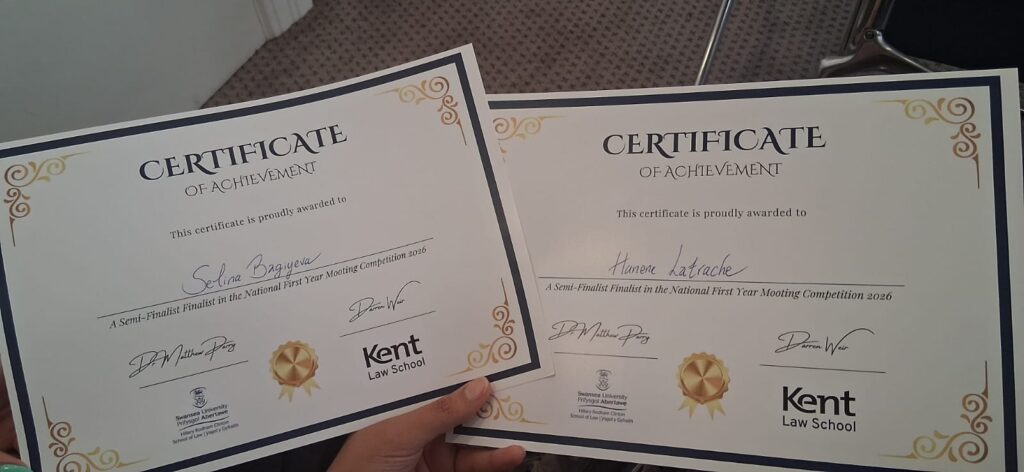
Hanene Latreche, Chris Osei-Owusu, Rumeysa Altun and Selina Bagiyeva reached the semi-finals of the National First Year Moot Competition 2026. This competition is organised by the Hillary Rodham Clinton School of Law, Swansea University and the University of Kent, and is sponsored by Francis Taylor Buildings Chambers. Here, Hanene gives us some insights into the competition and what made her give it a shot!
What made you decide to take part in this competition?
I had never done an external moot or a team moot before, nor have I done any sort of competition at such a large and grand scale. This moot is curated particularly for first years, so I felt at ease knowing that everyone is at a similar experience level. I also wanted to get over any nerves I had regarding team moots and large scale competitions, which I think have definitely succeeded with!
Had you done any mooting before entering this competition? If not, what were your initial thoughts or concerns?
Yes! I participated in internal moots with the Women in Law Society, and the City Bar & Mooting Society. The biggest difference was that it was a team moot, so I was very nervous and concerned about how it would work, and I was always messaging the organisers with questions to make sure I was doing the right thing.
I don’t know what I was expecting this moot process to be like, but it wasn’t anything like I thought. I definitely got in my own head about it because the competition was quite relaxed and a nice atmosphere, and the judges were incredible so I felt more comfortable as I proceeded through the rounds than I expected.
How did you prepare for the competition? Were there any techniques or resources that you found particularly helpful?
One thing that really helped me was the fact I had previously mooted. I knew where to find judgments, and how to make a skeleton argument and bundle. Westlaw is my best friend when it comes to mooting and I have become super familiar with the platform naturally as I progressed through the academic year and extracurriculars. But I think the most helpful thing was the communication between myself and my partner as well as the other City team. I don’t think it would have flowed as well or as easily if we did not communicate as effectively.
What was the biggest challenge you faced during the competition, and how did you overcome it?
Probably, as always, doing the bundle. I personally always struggle more with the formatting of the documents, than the creation of the arguments or finding the authorities themselves. I did what I knew how to do but made sure to take on previous feedback to try to make my bundles as clear and accurate as possible. Winning the preliminary rounds gave me confidence to include much of the improvements that judges gave me as I could.
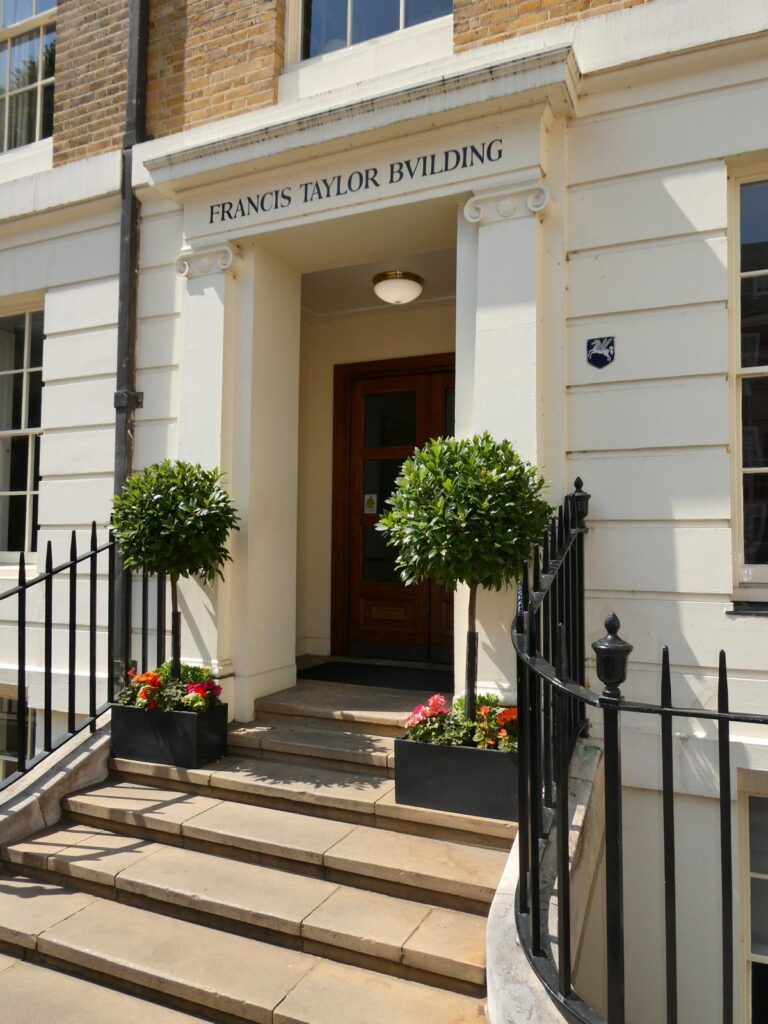
What was it like competing in the National Finals at Francis Taylor Buildings?
It was so interesting! The location of the building was very close to the other inns and Chambers, and it was a beautiful location. Being surrounded by King’s Counsel was also such a surreal experience. There was a wealth of knowledge around me and I definitely took advantage of the opportunity.
Was there a particular moment during the competition that you’ll always remember?
Making it to the semi-finals. I could not believe how far along I had made it into the competition. To even be one of the final 8 teams to make it to Finals Day was insane! But being a semi-finalist was unbelievable. I am very proud of myself and my teammate, and I can’t wait to see what else we achieve in the future.
What skills do you think mooting has helped you develop?
I think there are two things I have majorly improved since I first started mooting. Firstly: keeping the time. I talk a lot! And I know this is a weakness I have which would significantly disadvantage me in the timed conditions of these moots. One thing I have started doing is creating a script or a timeline for my submissions which last 4-5 minutes less than my allocated time, so that I can successfully go through all my points and still leave time for judicial interventions. This leads on nicely to my second improvement: responses to judicial interventions.
I remember the first time I dealt with judicial interventions so clearly. I was so nervous and I just went blank. But now, I realise that I know the law, I know the reasoning behind precedents, and I know the moot facts. I have tried to not let the judges throw me off, and to always respond clearly and without nerves, and in fact the most consistent positive feedback I received this moot was that I was very good with judicial interventions. So I am very glad that I can see these improvements and they are noticed by the judges.
What advice would you give to a student who has never entered a moot before and is thinking about giving it a go?
That you should go for it. We are all going to do something for the first time, and it is better to do it sooner rather than later. When you are in your undergraduate years, nobody expects you to be perfect. The whole point of these undergrad-specific moots and competitions and other industry opportunities , is because they understand we are new, have little to no experience, and they want to give us the chance to enhance and develop our skills. We are not expected to be perfect or have the advocacy skills of Harvey Specter in our first year! As long as you do your research, prepare in advance, and use the feedback you get, you will never be at a loss. You will always be gaining and winning something, even if you don’t win the moot itself!
Did participating in the competition change the way you think about advocacy or a future legal career?
Yes! One of my judges had a dual-role, both as a solicitor and a barrister, which was something I always wondered if I could do. As an International student, I am always considering my options and analysing my prospects, so speaking to him about how he does both was very eye-opening because I realised I was previously limiting myself, but after the conversation with him I felt inspired and knew that I will always have options for what to do.
If you could give your ‘first-day-of-mooting’ self one piece of advice, what would it be?
That I should stop saying “I think”! To this day I do still have this problem where I speak my own opinion instead of as the appellant or using points of law sometimes. You should never use your own opinion because it weakens your argument, so you should always back it up with the points of law, and never avoid the question. Ultimately, it is very rarely a question you don’t know the answer to. So take a minute to think before you speak, and you will be able to understand and answer accurately.