

Like most areas of law, we think about family law in terms of legislation, court proceedings, and legal outcomes. However it is important to remember that behind every family law case are people experiencing some of the most difficult moments of their lives, emotionally and physically. Separation, domestic abuse, and disputes involving children are not just legal problems, they are all events that can affect people’s mental well-being. A recent event held at Middle Temple as part of Pro Bono Week 2026 was ‘Revolutionising family law: Supporting clients through the trauma of the family court with a unique Emotional Toolkit’. Our panel for the evening came courtesy of the Dads House Family Law Clinic, with questions from Ceri Parker-Carruthers, the clinic manager.
This pivoted around discussions on the relationship between psychology and family law and served as a terrific introduction to the challenges for both clients and lawyers. It also explored why lawyers need to look beyond legal knowledge, and consider the emotional wellbeing of their clients.
The main theme of the evening focused on taking a more holistic approach to family law. The discussion focused on how families can be torn apart by conflict and how often the emotional needs of children and parents are forgotten during legal proceedings. The question is not:
“…how the law can resolve a dispute?”, but “how can it help families move forward.”
The Human Side of Family Law
An intriguing perspective came from Stephen Wildblood KC (3PB Barristers) who spoke about his decision to step away from the judiciary, where he had been the Designated Family Judge for Bristol and surrounding counties. He experienced burnout and realised the limitations of the traditional legal process; he wanted to do something that would make a difference to families and the children. He now acts as a Private FDR judge (an early neutral evaluator) and also works with consultant clinical psychologist, Dr Freda Gardner, to offer non court-based assistance to families who might otherwise find themselves involved in Family Court proceedings. His experience spoke on a problem: often, taking a case to court is not the best solution. Not for the family, and especially not for the child.
Court proceedings can be time consuming, expensive, and emotionally exhausting. Delays can make an already difficult situation even more frustrating, especially when parents are trying to establish arrangements for their children. In family law, the people involved are not just trying to win a legal argument; they are often trying to work out how to rebuild their lives while navigating the legal system. The adversarial nature of the court pits one parent against the other, while they should be focused on coming together in agreement in relation to their children.
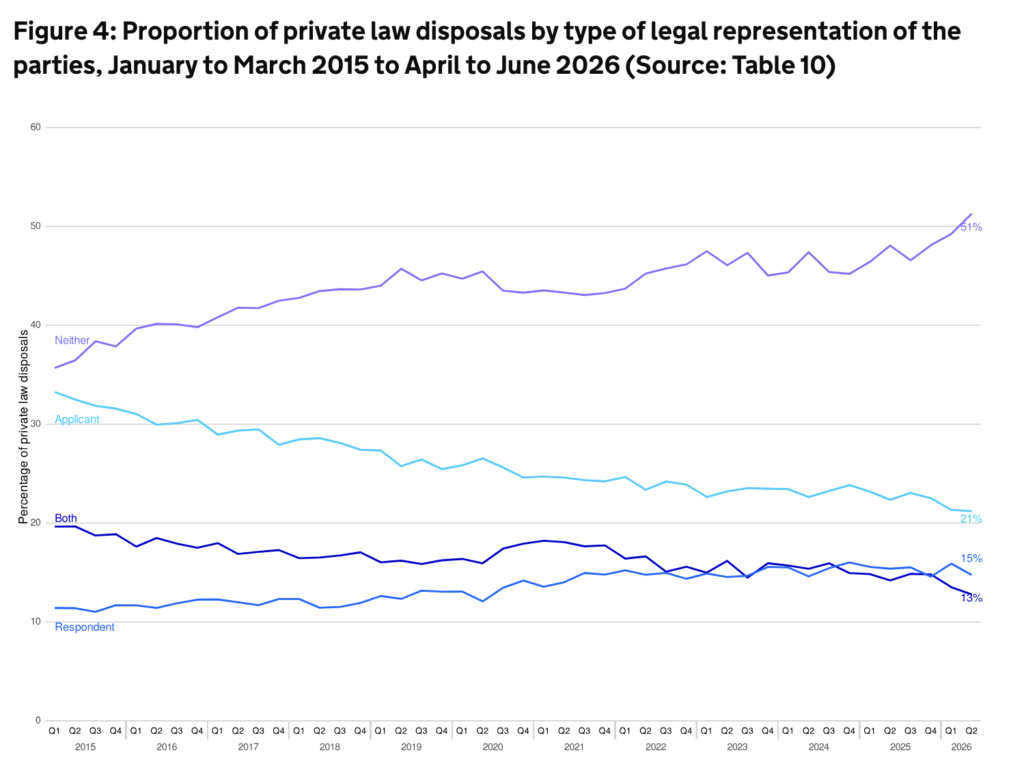
The presentation highlighted that legal aid is not available in family law, except in very limited domestic abuse situations. Many individuals who went to family law clinics are experiencing financial problems and do not know where to turn for support and assistance. Simon Bruce – Legal Director of Dad’s House Family Law Clinic (and Partner & Special Counsel at Dawson Cornwell) told us that their clinic often represents a parent’s last chance to find help. Indeed there are only 6 clinics in the whole of London who specialise in family law. Wildblood told us of the very bleak statistics that show most of those appearing in the family courts do not have legal representation, indeed in over half (51% April to June 2026 see Family Court Statistics) of such cases both parties do not have lawyers. The number of Private law cases under the Children Act started has increased by 11% from the same quarter last year (this amounts to 14,833 cases), We were told that the number of private family law cases amounted to 42,000 in 2014 but total 55,000 today. These statistics show the significant barriers many individuals face when trying to navigate the family justice system.
These challenges make empathy important. Family lawyers are often working with clients experiencing anxiety, depression, and emotional distress. Understanding the person behind the case is just as important as understanding the law.
Introducing the Emotional Toolkit
A key focus of the evening was to introduce a new innovation from the Clinic: The Emotional Toolkit. This resource aims to provide clients with guidance on managing their emotions and distress during the difficult journey they are on, whether this involves court, mediation, arbitration or all three.
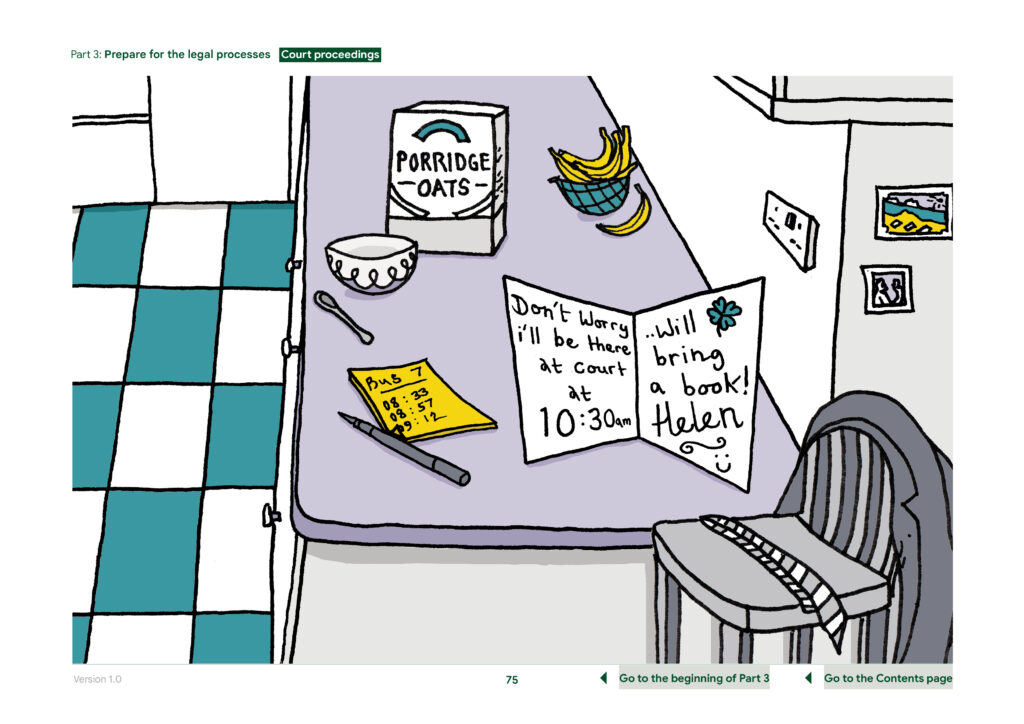
The toolkit was the result of a collaboration; written by a multidisciplinary team which included legal directors, barristers, psychologists, life and relationship coaches, and information designers. Its focus is on keeping children’s well-being the top priority while helping mums and dads process stress, conflict, and court-related trauma.
You can access the toolkit via the Dads House website and read more about how it was created on Tl;dr (City Law School’s own Professor Emily Allbon partnered with Dr Rachel Warner (Reading University) to design the toolkit using the content created by the Dads House team).
A key takeaway was that lawyers should not take on the role of psychologists; there are situations where professional help from outside the legal system is necessary. We heard about how at Dads House, those visiting the clinic will find a mediator (Jemma Jupp) and wellbeing coach (Jo Petschek) round the table with the lawyers. The toolkit represents an additional support mechanism and is intended to complement the work lawyers already do.
A Trauma-Informed Approach
We were introduced to the concept of a ‘trauma-informed approach’ during the discussion. This approach ensures that professionals shift their perspective from asking “What is wrong with this person?” to “What has happened to this person?”. Although the distinction may seem small, it can change how lawyers interact with their clients with a better understanding. We heard a lot here from Dr Kerry Devine, a psychologist turned lawyer (and former volunteer with Dads House). She, along with Dr Melernie Meheux, educational psychologist, were responsible for a great deal of the toolkit content.

People experiencing family breakdown may have histories of trauma, anxiety, or difficult personal conflict that impact how they communicate and respond to situations that are stressful. A client who seems angry or overwhelmed may not necessarily be difficult to work with; they simply might just be struggling with the emotional weight of their case.
Trauma-informed practice applies six core principles but I’ll just detail two here: safety and trust. Clients need to feel that they are in an environment where they can communicate openly without the fear of being judged. Transparency is just as important, especially when individuals are unfamiliar with court proceedings and unsure about what will happen as the proceedings continue. When children are involved, these principles are especially important. During mediation, for example, the focus should not simply be on the disagreement between parents. It should also consider the child’s perspective and what arrangements will best support their future wellbeing.
Mediation offers an opportunity to pull away from conflict and towards practical solutions. Instead of concentrating only on what has gone wrong, parents can begin planning on moving forward, and how they will work together.
Why Empathy and Patience Matter
Perhaps the most memorable message from the discussion was the importance of empathy when working in family law. Bruce quoted one of the dads the clinic had helped by saying that ‘Going through family separation is a marathon, not a sprint’ (this also appears in the toolkit, alongside other gems from clients). Lawyers must recognise that clients may need time to process information, make decisions and come to terms with significant changes in their lives. Patience is key.

The discussion also addressed the stigma surrounding mental health and the importance of encouraging families to seek support. Family lawyers play an important role in recognising when clients may need help beyond what the legal system can provide. Their advice can change a family’s life and how they move forward. We heard from Sophie Hill here, Honorary Counsel at Dad’s House and barrister at Coram Chambers. She also spoke on the barrister-solicitor relationship in such cases.
Ultimately, the emotional toolkit is a step in the right direction in terms of a more compassionate approach to family law. It acknowledges that good legal practice is not simply about knowing the law and being able to put a case in court. It’s also about understanding human behaviour, emotional wellbeing, and of the circumstances which bring people into the justice system.
Looking Beyond the Legal Outcome
What stood out to me most was the idea that the law is an instrument for helping people. The law is something to help and serve people. Legal knowledge is important, but it can’t blur the human experiences behind each case.
For aspiring lawyers and students, this discussion shared a reminder that empathy is not separate from professional competence. Understanding clients, recognising emotional distress, and knowing when to seek outside support are all important parts of effective legal practice. Family law will always involve conflict and difficult decisions. However, incorporating psychological awareness and trauma-informed practice gives lawyers an opportunity to make the process more supportive.
Sometimes, the most meaningful thing a lawyer can do is not achieve a favourable legal outcome but help someone navigate one of the most challenging periods of their life.