
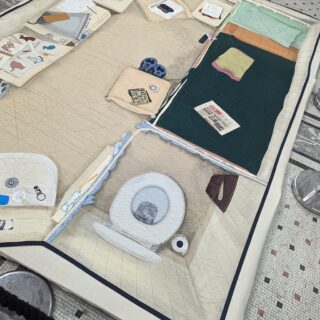
Goethe tells us that Architecture is music made solid – the Royal Courts of Justice proves this maxim – it is the great imposing blasts of the past transmuted to cold stone and smooth marble. In those great 19th century halls, halls that seem designed to domineer, to project imperial austerity, to exact a cruel justice, lies something different from its surrounding, warm not cold, soft not hard, textile not flagstone.
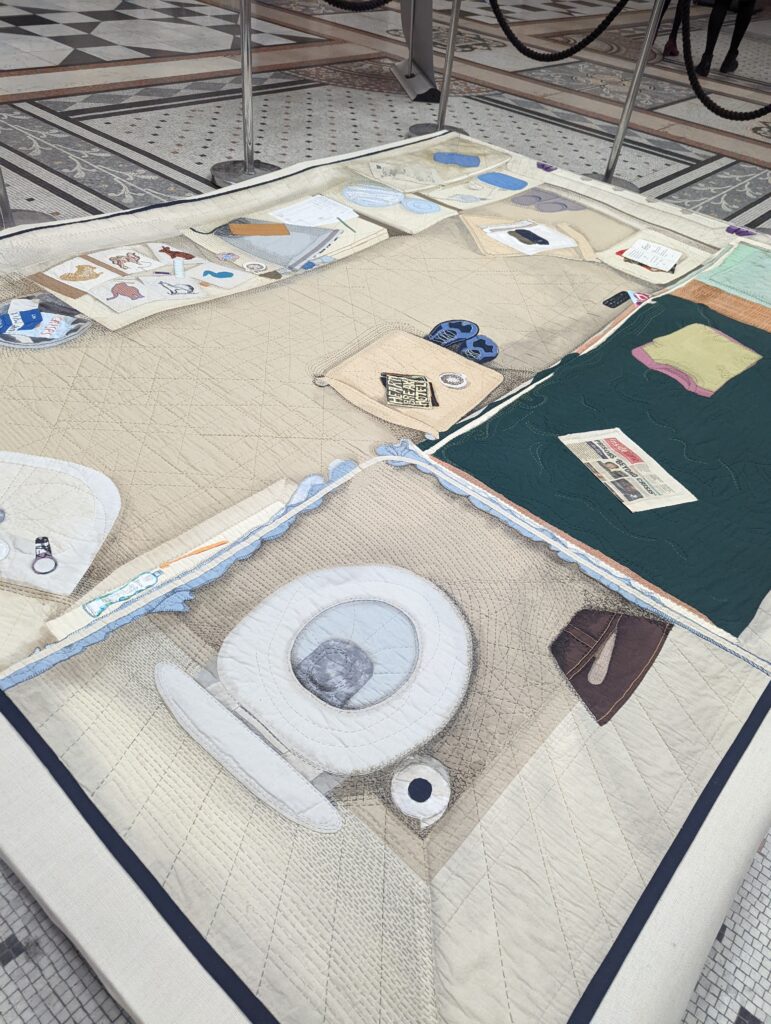
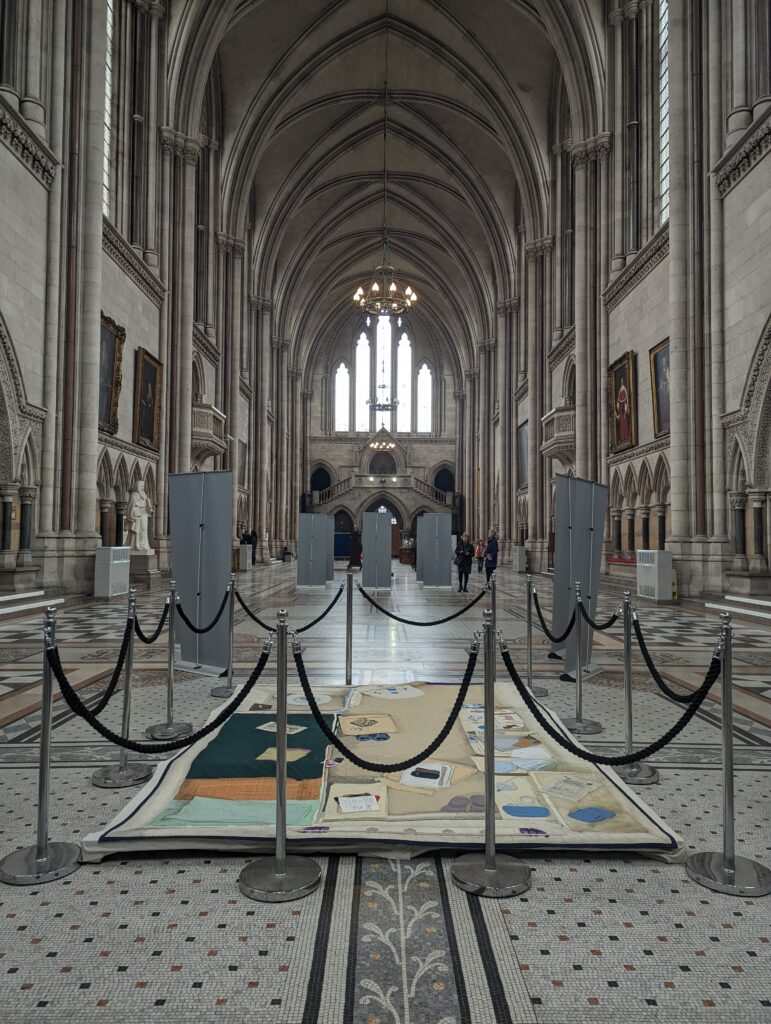
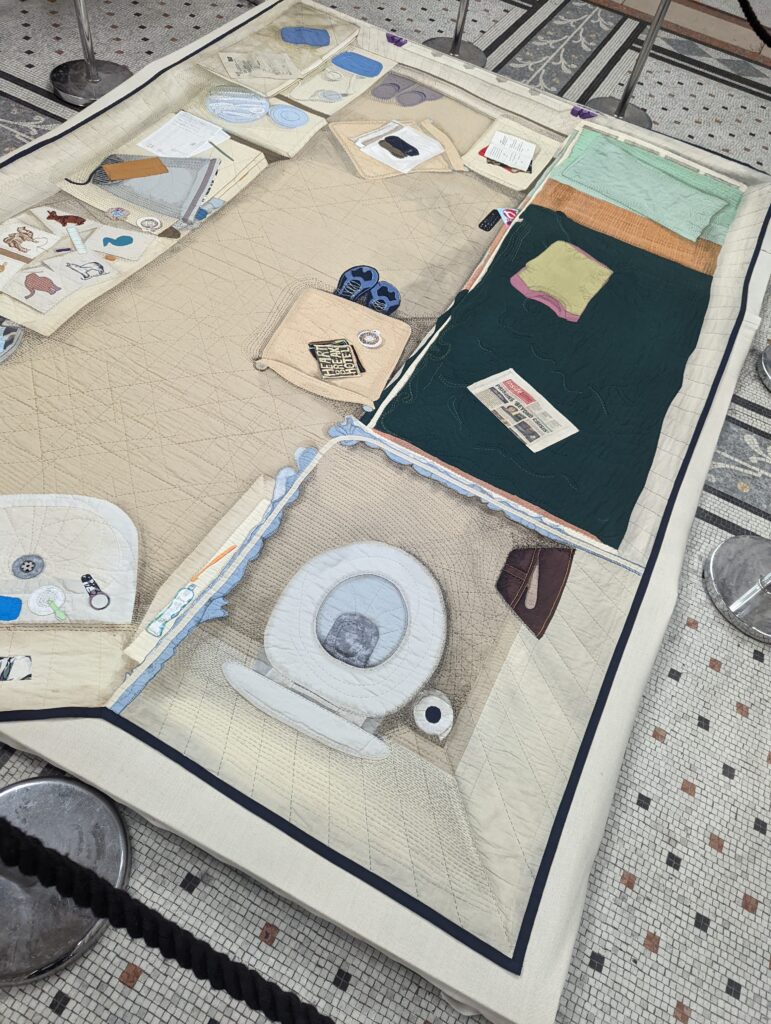
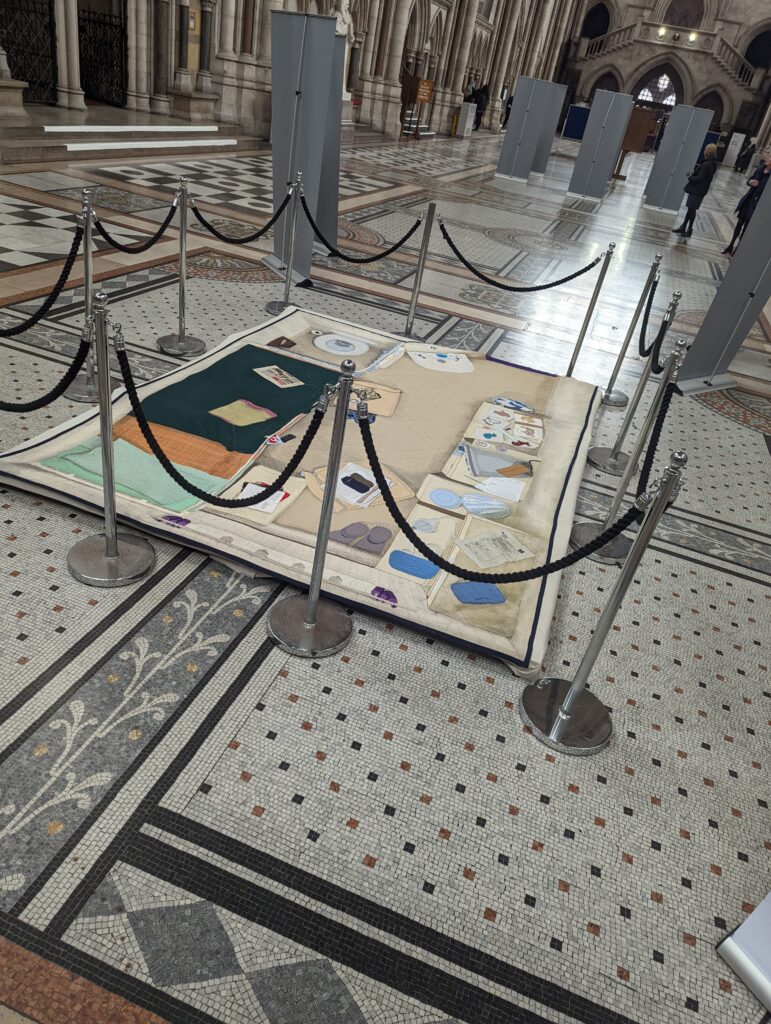
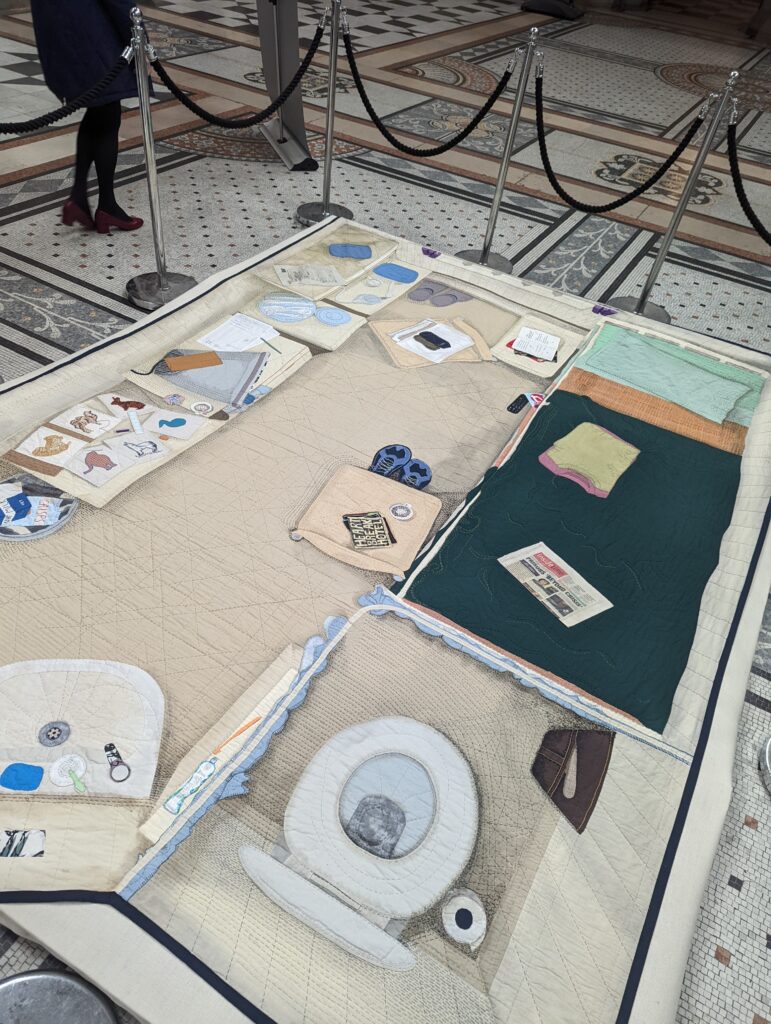
Laid in the very centre of the Royal Courts of Justice is Fine Cell Work’s The Cell Quilt, a life-sized aerial view of a two-man prison cell in HMP Bullingdon. What you notice first is the size of space that two people are expected, and forced, to live in – a space made smaller when compared to the neogothic cavern that surrounds it. Once accustomed to this lack, you begin to notice the details that The Cell Quilt is strewn with, it is a piece of authentic representation – showing those lucky enough not to have spent time at His Majesty’s Pleasure, what the inside of a cell really looks like, not one beautified for a BBC bulletin, instead one filled with clothes, drawings, shoes, overfull bins, and toiletries – the real stuff of life. This authenticity, however, is still mediated by the form of presentation, we are shown a slice of real life, but we are still protected from the harsh reality, it is a cell, but a cell made of thread and fabrics.
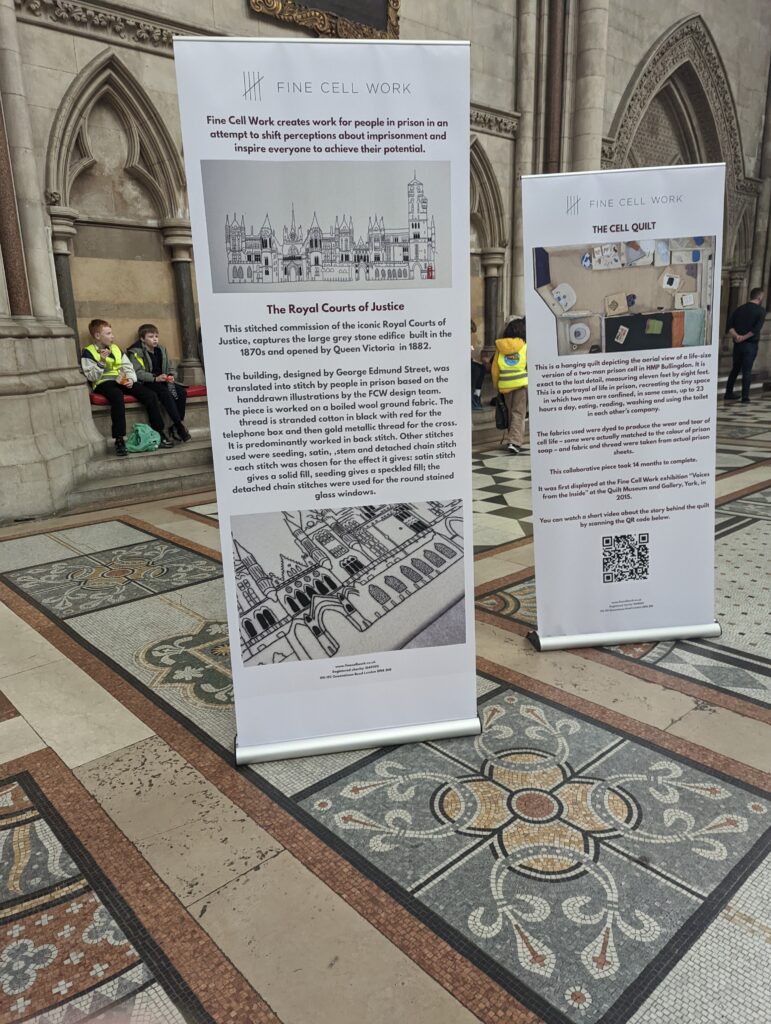
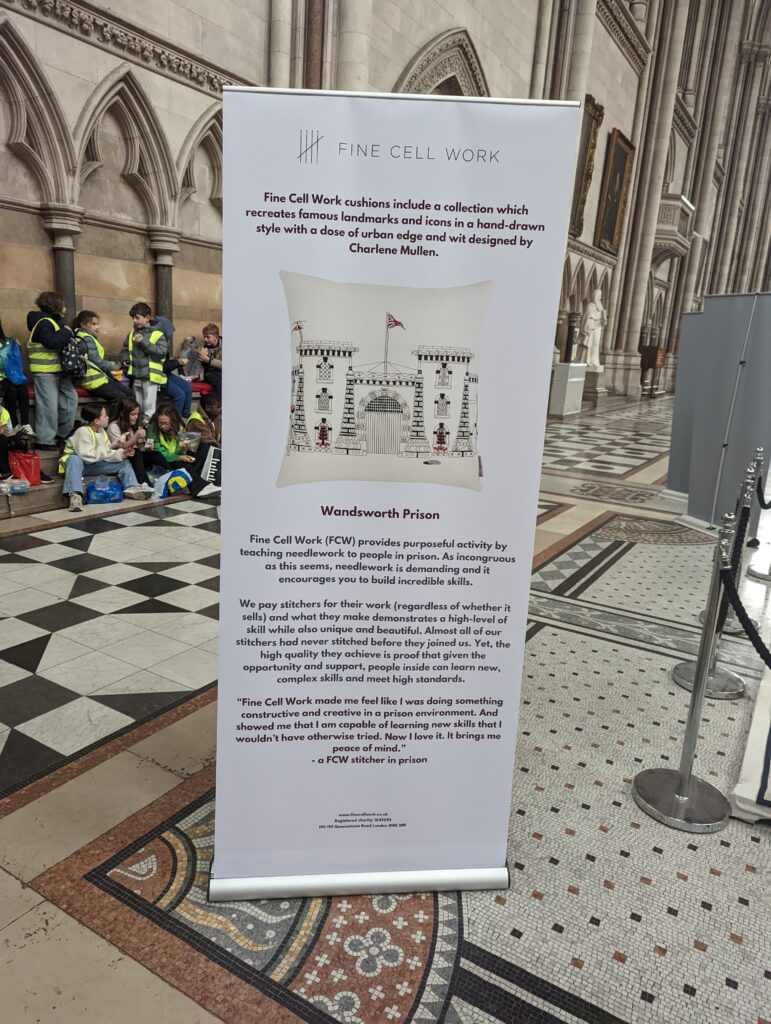
In The Cell Quilt we are shown the stitcher’s reality and their humanity, the stitchers employed by Fine Cell Work are prisoners and prison leavers. It is the only charity in England and Wales that provides paid, professional, high-quality craft opportunities to people in prison. Fine Cell Work’s aim is to enable prisoners to be more than their past, it has been shown time and time again that allowing prisoners to engage in art opens a powerful route to rehabilitation, Fine Cell Work is an important part of the fight to make prison genuinely rehabilitative. Fine Cell Work doesn’t just produce art to adorn the Royal Courts of Justice, it is also a working studio producing high-quality, hand-made needlework.
As a law student, much of my time is spent trying to memorise as much as is possible of our legal system, of our rules, our regulations, the great and rich history that speaks through case law. What is often forgotten, and not just by students, is that our legal system is not about the legal professions – it is not because they look so immaculate in their wigs that the judge is important, it is not because they are so eloquent that the barrister is necessary, it is because all of us are engaged in trying to ensure our most basic of obligations to one another are fulfilled. Too often the victims are overlooked, but equally wrong would be to pretend that conviction is the end of the story, when someone is convicted of an offence, any offence, it does not mean that their humanity or fundamental dignity should be removed alongside their liberty.
My legal education has been verbose on what an offence is, and how to punish the wrongdoer, but silent on the why laws are broken, on how people are treated whilst fulfilling a sentence or after their punishment is over. This is where work such as The Cell Quilt comes in, it is a powerful piece that asks us to confront our own attitudes, or negligence, of the thousands of people currently incarcerated. It reminds us that the prison population is still a population, a mass of people many of whom who desperately need support, both with their lives inside, and their lives outside, the prison walls – and like any population, they deserve the chance to live their aesthetic lives, to engage in art as maker and as viewer. Fine Cell Work provides an opportunity for prisoners and prison leavers to get real support, through developing real work skills, and developing artistic practices.

The Cell Quilt provides an opportunity for all of us, from judge to jury, to reflect on this small patch of soft and shocking small art, that allows us a glimpse inside the lives of the 85,000 people in the UK prison system. The Cell Quilt is a testament to the skill of the artists at Fine Cell Work and to their fundamental vision of hope, hope that transformation is possible – that even in the great cold halls of the Royal Courts of Justice, something soft and human can be found.
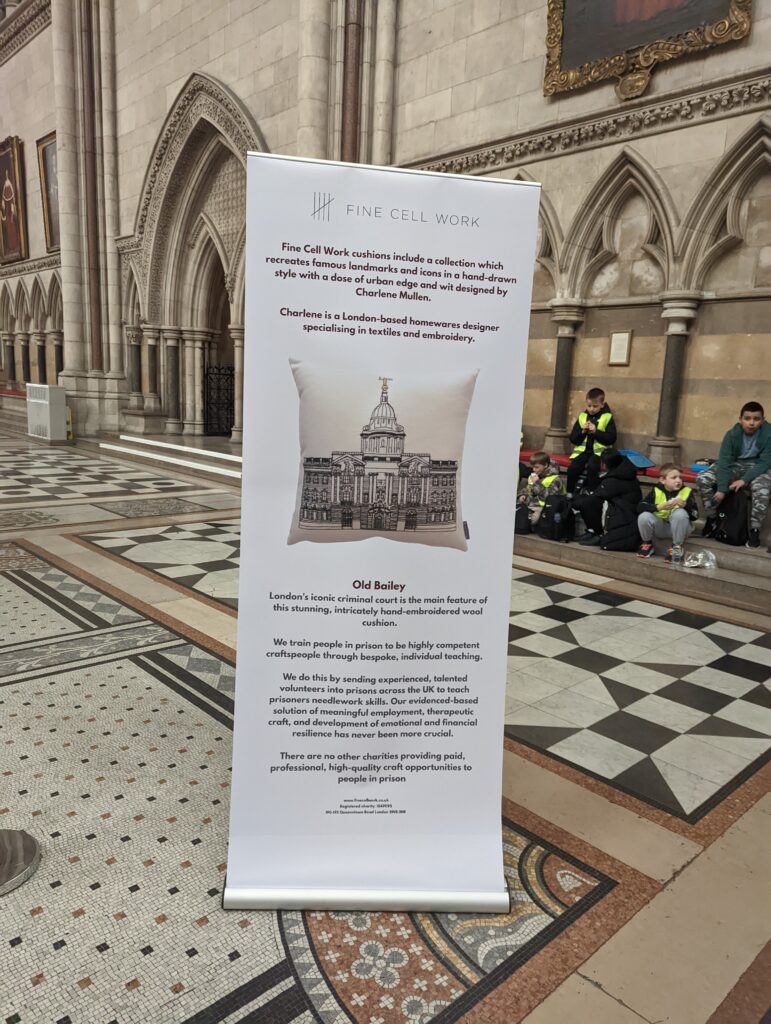
Editor: Big thanks to Iain for going along to the RCJ to review this exhibition. I’m sure his reflections have prompted you to want to go along and see it for yourself, we’re pleased to share that the exhibition runs until 1st April 2026 and is free. Have a look at their shop to see some very special cushions which include a London Landmarks range (complete with Old Bailey).