
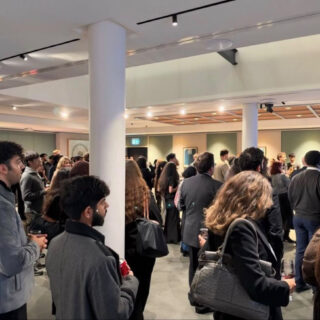
Carla Isacov had never been to a networking event before. By the end of one evening at Salisbury House, she had talked about fashion law with a solicitor apprentice, about criminal work with a barrister and a solicitor, and about the importance of retaining a hobby alongside law with one of the organisers.
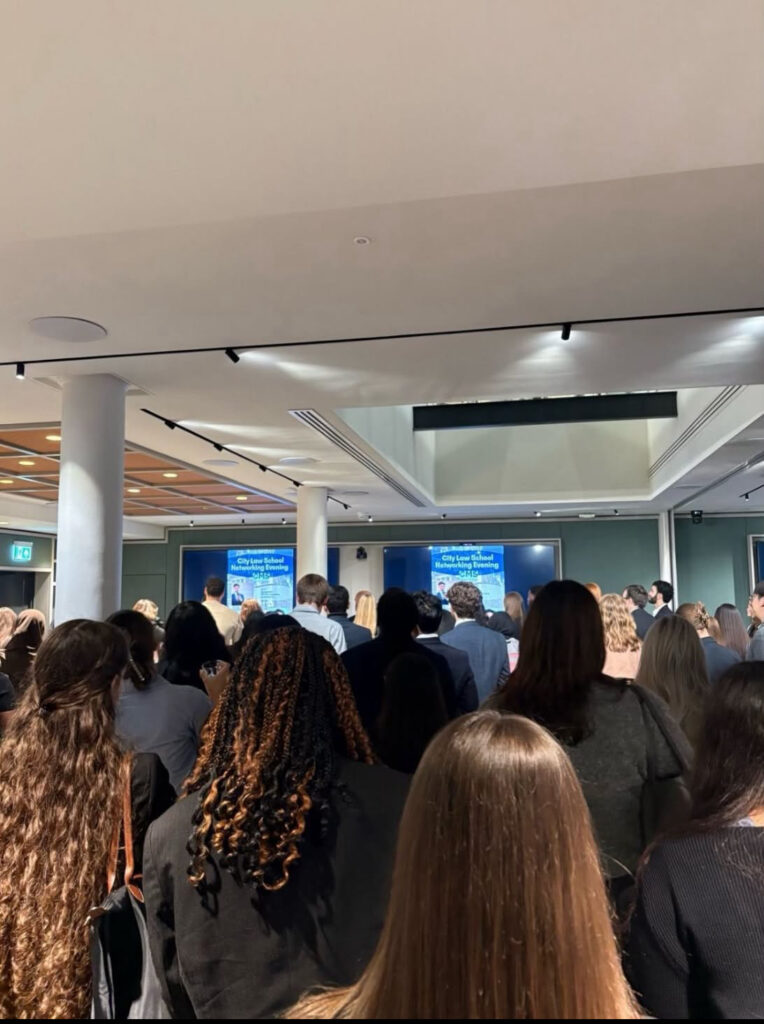
That range was the point. According to the organisers, around 200 people came to the City Law School Networking Evening on Thursday 22 October, among them 20 professionals, from trainees and apprentices to partners. They came from firms including Baker McKenzie, Ashurst Perkins Coie, Vardags and CMS. In one room, students could meet lawyers from different practice areas and firms without applying to any of them. Usually, it works the other way round. To get a place at a firm’s open day, a student may have to write around 200 words persuading the firm they already like it, when the point of the day is to find out whether they do.
The evening ran from 6pm to 9pm at the Salisbury House Eventspace on London Wall. The ticketed event (students paying a subsidised amount thanks to a contribution from the City Law School) was organised on behalf of the City Law School by Alissa Mykal and Stefania Ganotaki, the first students to share the role of head of City’s law societies. They had run a successful commercial law evening last academic year (March 2026), which Lawbore covered from behind the scenes, but this time they opened it to students interested in any area of law. I helped invite the CMS guests, four solicitor apprentices and a trainee.
“We know first-hand that the law is a notoriously competitive sector and securing a position within the industry poses challenges,” Ganotaki said. “That said, our objective was to provide an inclusive opportunity for students to begin their career navigation.” Mykal wants students to graduate “with more than a degree”. The conversations, she said, let students:
“reference who they met, what they learned and how it shaped their interest in a firm or area of law”
…when they apply.
That is also why they chose October, in time to help with applications for insight days, vacation schemes (short placements at firms), training contracts (two years of training at a firm, one route to qualifying as a solicitor) and pupillage (a barrister’s final stage of practical training).
Getting students talking
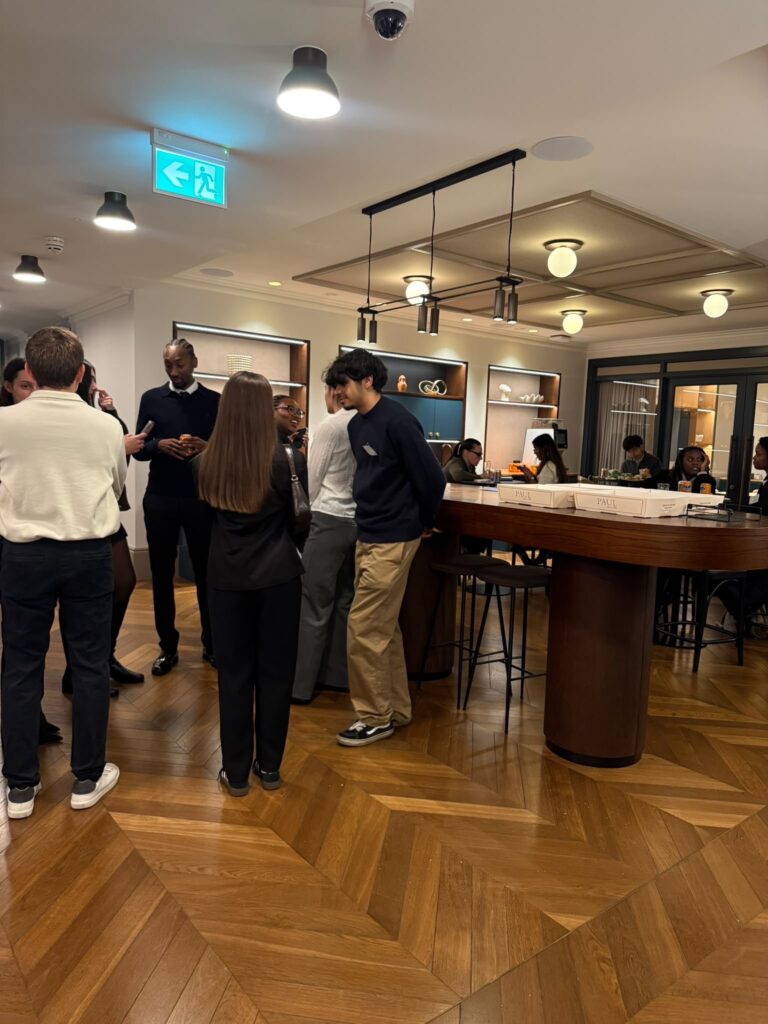
With seven or eight students for every professional, helping students start conversations took work. “Many students came on their own, and this was the first time networking for many,” Mykal said. When the pair spotted a student standing alone, they asked which area of law interested them and introduced them to one of the professionals they had invited. “The expression ‘don’t be shy’ is well-intentioned but overly utilised,” Ganotaki said. “In tackling this, my approach was to create a personable atmosphere and subsequently a space where students felt they could express themselves freely.” Isacov was one of the students she spoke to, and they talked about retaining a hobby alongside law.
I arrived at about 7:30pm, so I missed the start, but I saw this happen. Students came up to Aarav Thakur and Naiem Uddin, CMS solicitor apprentices who are qualifying as solicitors while they work, to ask how the two had got there and to swap LinkedIn details. Some had read their name badges and come over. Others were brought over by Mykal and Ganotaki.
When I introduced Isacov to Thakur, she mentioned her interest in fashion. He explained how she could combine it with law through intellectual property work or an in-house role at a fashion brand. A conversation with John-Paul MacNamara, one of the law school’s senior lecturers, who is also a door tenant at 33 Bedford Row as a criminal barrister, changed how she saw criminal work. It is, in her words, “more reading, writing… than actually advocating in court”. She also spoke to Arjun Popat, a criminal solicitor at Freemans Solicitors.
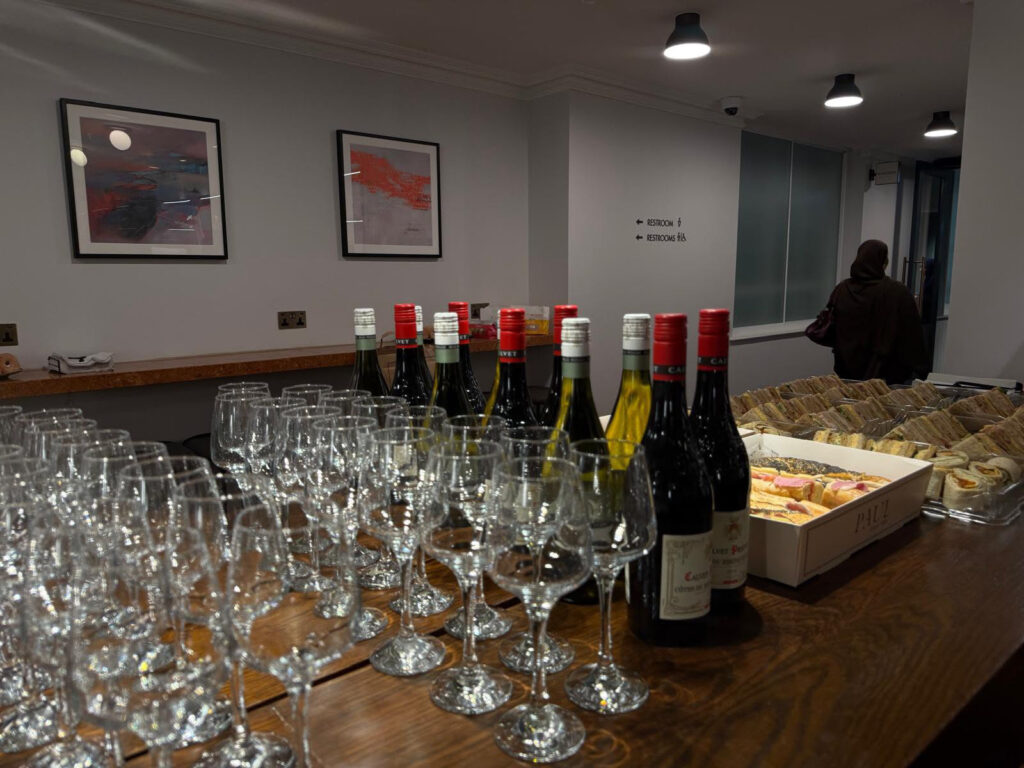
Not every conversation came easily. Some of the guests she wanted to meet were busy whenever she tried. “Every time I tried to speak to them, they were already speaking to a group of people,” she said. Next time she would push herself more, because, as she put it, “my lack of confidence was holding me back. I wasn’t asking… every question I wanted to ask.”
“I’ve never talked so much at an event in my life!” Callum Leary, a real estate partner at Greenwoods, wrote on LinkedIn that evening. His conversations ranged from different types of firm to how AI is changing legal work, he wrote, and several students were weighing up the Bar (training as a barrister) against becoming a solicitor. Thakur was surprised by how interested students were “in the lifestyle associated with working at a particular firm”. Having joined CMS, he now thinks “the working culture and lifestyle a firm offers can genuinely make or break your experience.”
What comes next
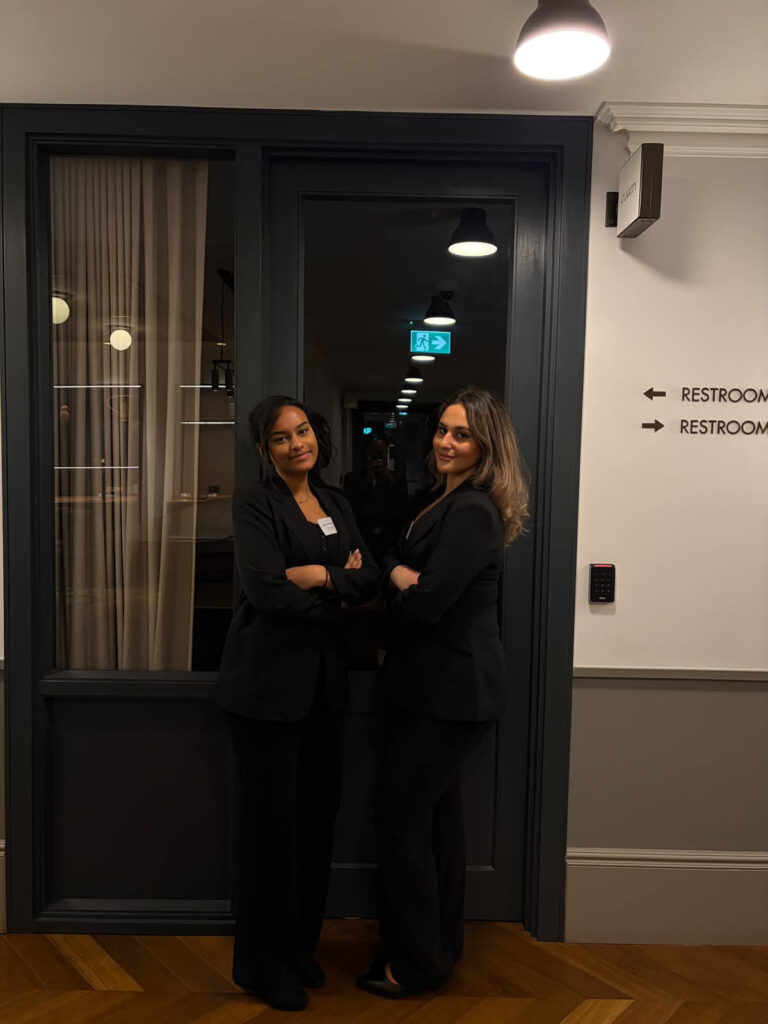
Both organisers want it to become an annual event, with more early-careers professionals there (the people at firms who run trainee recruitment), so students can “hear directly from the people reviewing their applications”, as Mykal put it. When I asked about inviting students from other London universities, Ganotaki called it “the next natural step”. Mykal’s ambition is “to set a standard for what student-led events can offer”.
Isacov left with advice from lawyers in very different fields, and from fellow students too. A third-year came over to give her advice on getting through second year, the year Isacov is in now. When Isacov said she hoped to work in New York, another student who had worked in the US, suggested she consider building her career in the UK instead. As Mykal put it,
“The people we study alongside today may become our colleagues tomorrow.”