

I didn’t moot in my first year because it frightened me. I grew up very shy and quiet, and standing up in front of a judge to argue a point of law felt like something other people did, people who were louder, braver and better prepared than me. So I watched from the sidelines.
This year, I decided to step out of my comfort zone and make the most out of university. On the 21st of October, I took part in the preliminary round of the City x QMUL Pro Bono Moot Competition as the Junior Appellant. This is Part 1 of my story, and Part 2 will follow after the trial.

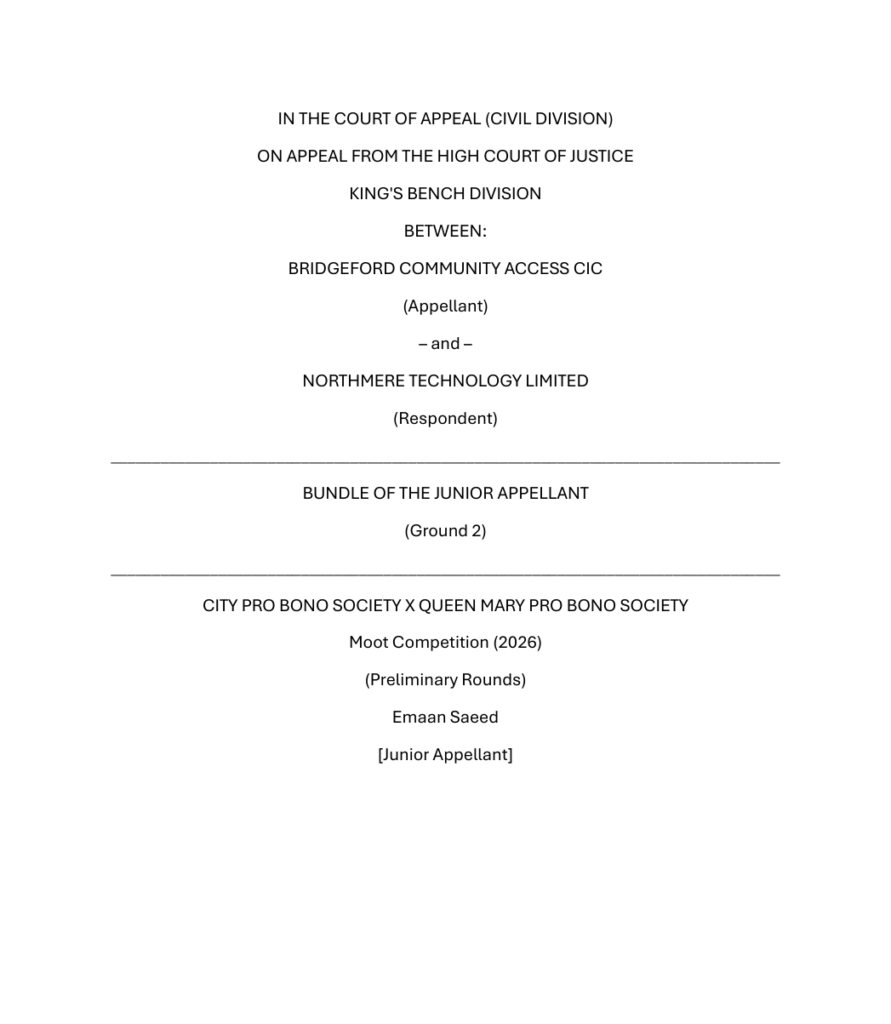
The preparation was more practical than I expected. Each of us wrote an individual skeleton argument and put together a bundle containing the moot problem, my skeleton argument and the sources I cited, then uploaded it to a shared Google Drive for the judge. I fitted it around my other commitments by doing it in small blocks: readings on the train, drafting at the Pavilion lounge study area at City’s Clerkenwell campus, and reviewing the case at home.
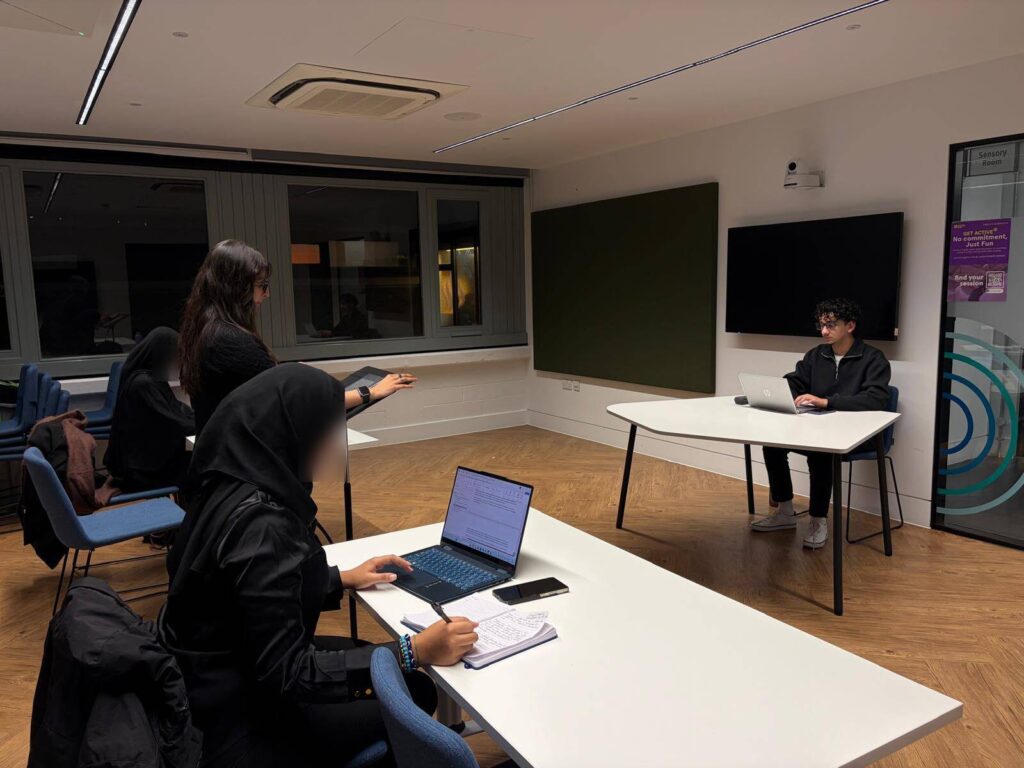
On the day, our group had to wait for Group C to finish. We sat in a booth near the student support help desk, chatting about mooting and skeleton arguments, which eased the mood. The judge was one of the society’s committee members, and everyone was dressed in business casual. And yes, my fears did come true. As I presented to a judge for the first time, I stuttered and my hands shook. But I managed to recover.
The hardest part was the judge’s questions. I knew how to answer one. The other I couldn’t answer; I stuttered, and even when the judge brought it up again, I had nothing. It’s a horrible feeling, standing there with a question hanging in the air. But I learned that it’s survivable.
What surprised me most was that mooting honestly wasn’t that bad. I had pictured a grand court and an angry, impatient judge who would yell at me for every stutter. It wasn’t like that at all, at least in the preliminary round. I didn’t make it through, but I scored 31 out of 50, which for a first moot isn’t bad. I got 8 out of 10 for legal analysis and use of authorities, and 8 out of 10 for structure, strategy and persuasiveness. So the preparation worked. What I needed to improve is my delivery and how I handle questions.
What the organisers and judges told me
Afterwards, I sent some questions through the social media officer to four people behind the competition: Yaqub Kheyar and Chris Osei-Owusu from the City Pro Bono Society, and Botond Lakatos and Danya Mahoon from the QMUL Pro Bono Society. Here are the nuggets of mooting wisdom I gleaned:

Nerves alone aren’t marked down. Chris said nervousness or stuttering “generally does not attract lower marks by itself”, and Danya said judges don’t really take nerves into account. Yaqub once paused a hearing to reassure an overwhelmed mooter, and Botond opened the floor in the closing minutes so nervous mooters could present more of what they had prepared.
Five equal criteria. Marks were out of 50, with 10 for each five categories: (1) legal analysis and use of authorities; (2) structure, strategy and persuasiveness; (3) oral advocacy and delivery; (4) handling of judicial interventions; and (5) professionalism and courtroom etiquette. Judges marked separately, then compared. Chris pointed out that mooting is “primarily a legal exercise rather than a public speaking contest”. Note though, that every competition you enter will have different marking criteria.
Not knowing is fine; bluffing isn’t. Yaqub warned that inventing an answer “can undermine the credibility of your wider submission”. Chris said a good response is to acknowledge the difficulty, think it through logically, or explain why the point doesn’t affect your submission. Danya added that the questions aren’t meant to catch you out, and Yaqub said judges aimed to ask every mooter at least one question, often trying a different angle if someone struggled.
Common mistakes. These included: reading from a script, not anticipating questions, poorly prepared bundles, and arriving late or underdressed. Yaqub added that surprisingly (?) some mooters didn’t even read their opponent’s skeleton arguments in the shared Drive or coordinate with their senior counsel, explaining that “mooting may be assessed individually, but effective advocacy requires collaboration”. It is essential to see what authorities your opponent is relying upon at the very least. He also noted courtroom phrases picked up from shows like Suits don’t always work in English courts!
How to practice. Ask a friend to challenge every argument, prepare for counterarguments, go to a workshop, and watch recorded moots, you can see some on Learnmore and some via the City Bar and Mooting Society website. Chris also recommended pausing before you answer so you don’t waffle.
Not just for barristers. All four said the skills gained during mooting are not just helpful for barristers, but solicitors too: research, drafting, thinking under pressure and advising clients are all pertinent for both strands of the profession. The competition itself is a first for the Society, and its problems moved from contract law to housing and immigration law; areas where access to justice really matters.
Would I do it again?
Yes. I want to qualify as a solicitor, which is a long way from being a barrister, but presenting an argument clearly or thinking on your feet are useful in any legal career. Next time, I want to practice answering unexpected questions (called ‘judicial interventions’) out loud, so I’m not caught off guard.
If you’re thinking of trying it, my advice for first-time mooters is: prepare, practice out loud, know your authorities, and project your voice. Don’t panic when the judge interrupts, and don’t be afraid to ask them to rephrase a question. Answer it before returning to your argument, and don’t be afraid to concede a point. Be respectful, keep your submissions structured, and enjoy it.
Look out for a report of the final round (which happened on Thursday the 19th November) soon.