

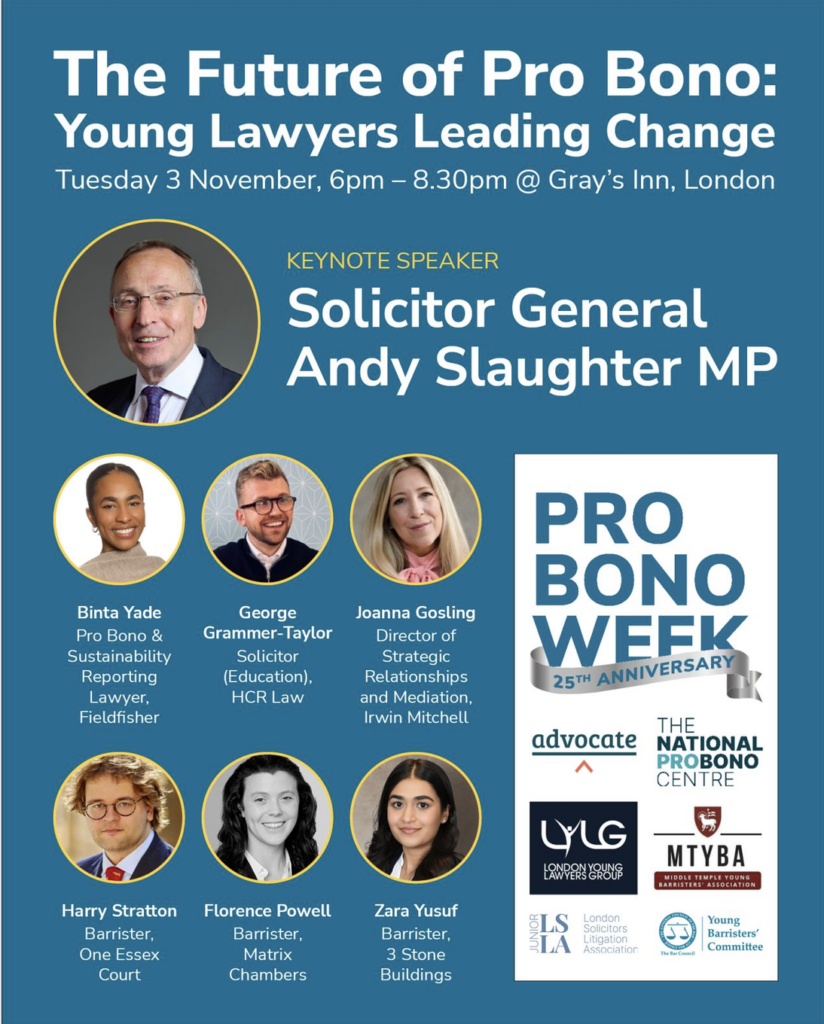
Five minutes. That was all the time Zara Yusuf had with her client before a directions hearing. She had never seen the papers before, and her client was stressed and confused. But when Zara stood up in front of the judge, she pointed out that her client was the wrong party and should not have been part of the case.
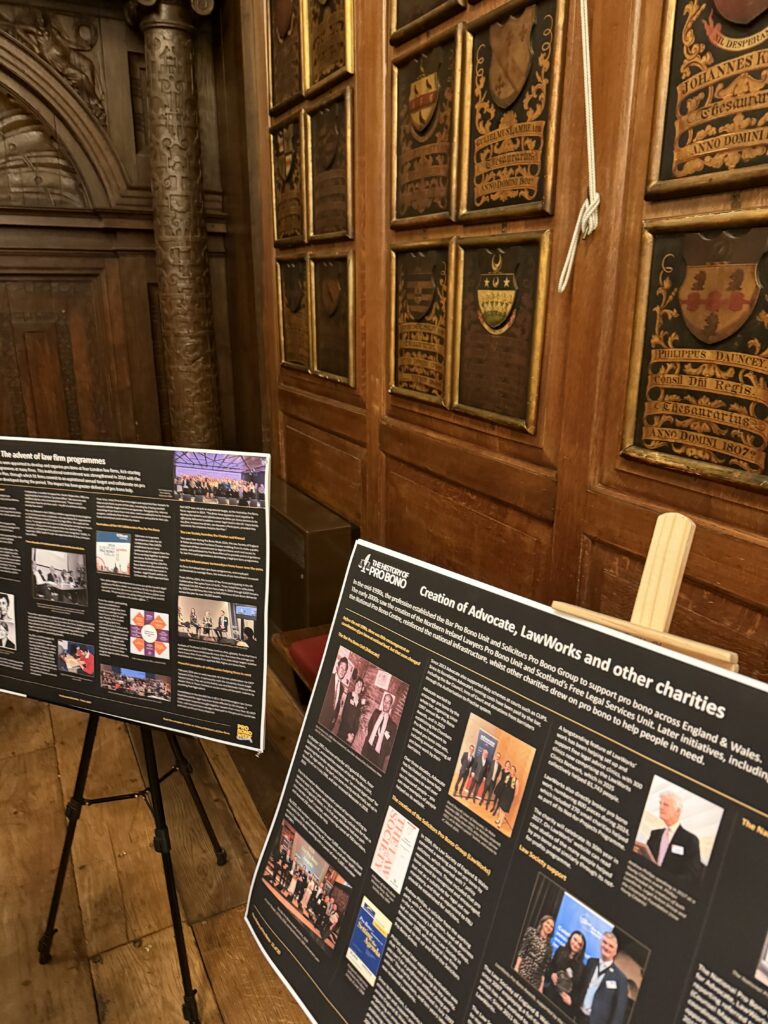
This was one of many stories I heard at Gray’s Inn on November 3, 2026, at ‘The Future of Pro Bono: Young Lawyers Leading Change’, held during Pro Bono Week. This was the 25th Anniversary of this important week in the legal calendar.
The beauty of pro bono
The evening started with a focus on collaboration. We were reminded that pro bono work is valued by senior judges and the government, and that the justice system depends on it.
Then came a line I didn’t expect. We were told not to be embarrassed about how pro bono can help your career. It gives you experience in courts and cases you might not otherwise see. You can help people and build your own skills at the same time.
Different routes into pro bono
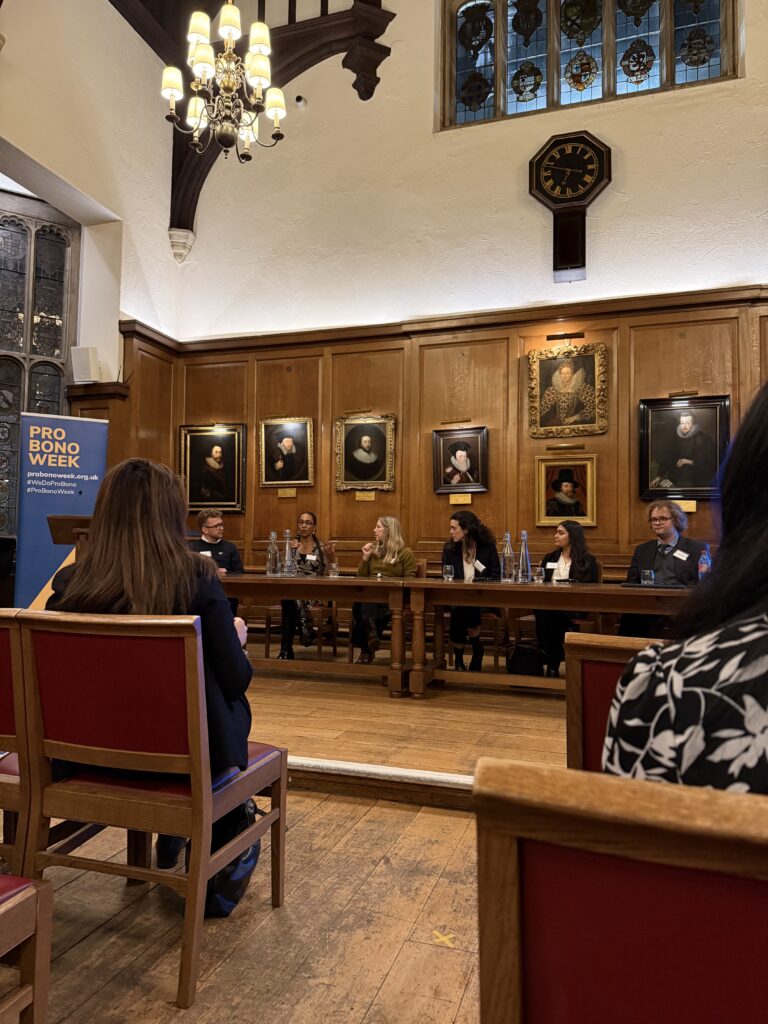
The panel, chaired by Joanna Gosling (Mediator and Director of Strategic Relationships and Mediation, Irwin Mitchell) brought together five young lawyers who had each found pro bono in a different way.
For some, it started at university. Zara volunteered widely as a student, but it was helping people facing the loss of their homes that cemented her desire to do this work. George Grammer-Taylor was introduced to pro bono through his university. He spent six months on Ukraine-related immigration work and is now a trustee. Florence Powell first came across pro bono in her final year, and later supported people in prison during a charity internship. Now at Matrix Chambers, she credits pro bono with helping her secure pupillage.
For others, it came later. Binta Yade’s interest grew during her training contract.
Some of the panellists spoke of the aspects of pro bono work which surprised them. Harry Stratton shared that clients who come across as diffident or indifferent initially can often end up being the ones you feel for the most.
A plea deal, a client and a flight to America
George talked about working on a death row case in the United States. He even travelled there to meet the client. The legal advice was that the client should take a plea, but the client said he had done nothing wrong. George was honest about how hard this was. He had to balance the client’s strong belief in his innocence with what was best for him. His advice to us was to ensure you find something you care about, because pro bono can change people’s lives.
Small amounts of time can make a difference
Florence told us about a client who was confused about money coming into her bank account. Florence spent about 20 minutes going through it with her, step by step. The client left feeling much clearer and confident about her situation.
Zara’s five-minute hearing demonstrated the same thing. You don’t always need hours on a case. Sometimes focusing on the key issue is what matters.
Finding the time
One person in the audience asked a question many of us had. How do you do pro bono while working full time?
George stated that when he chose his firm, he looked for one that would allow him time for pro bono. He said many people in full-time jobs give 30 minutes to an hour a week, and that this really does make a difference. Not to mention, working with charities can be more flexible. Florence said she got involved through evening advice clinics.
The panel also explained that a lot of advocacy work comes parcelled up, with each piece often finished within a few days. You can carry on with a case (taking another piece) if you want to. Zara said she never worried about being ‘stuck’ with a case, because another barrister or solicitor can always slot in to take over later stages.
The main message was clear: if you care about it, you will find the time.
An old tradition
The Solicitor General, Andy Slaughter KC MP, gave a keynote speech on how important pro bono is for supporting the people who need it most. Another point that stayed with me was that pro bono is not new. It goes back to ancient Rome, so what we heard that evening is part of one of the oldest traditions in law.
Where to start?
If you’re a first-year student wondering whether pro bono is for you, look at how the panel started. Most of them found it through university schemes, internships or volunteering. At The City Law School, one option is the City Community Legal Advice Centre (CityCLAC). Pro bono projects cover areas such as social housing disrepair, family law, immigration, corporate insolvency and personal injury. You can also help review possible wrongful convictions through the Innocence Project.
I have joined CityCLAC as a Student Adviser for the Immigration service at the start of my first semester. Even after a month, I have seen how much the role depends on empathy and attention to detail. For instance, understanding each client’s circumstances and asking the right questions within the scope of the support we can offer. If you are thinking of applying, don’t let a lack of experience put you down. As the panel said, you can learn about a new area as you go.
All in all, I went to Gray’s Inn thinking pro bono was something you do once your career is settled. I left thinking it could be a great way to start one.