
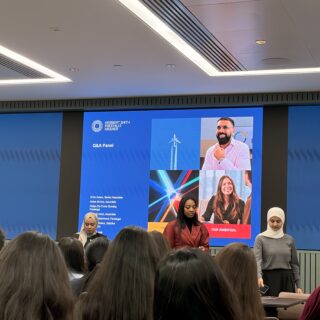
What does it mean to see yourself in a profession before you have even entered it?
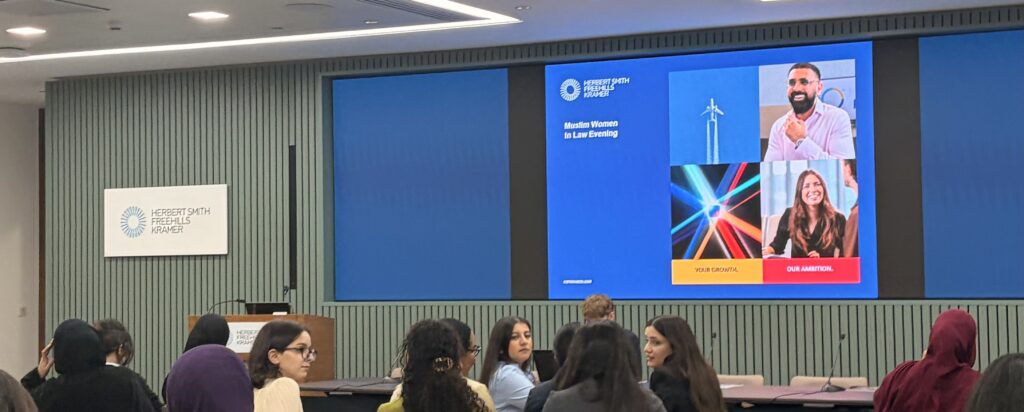
For aspiring lawyers, understanding how to secure a vacation scheme or training opportunity is one thing, but imagining what life within a law firm might actually look like is another. I sought to explore this idea while attending the Muslim Women in Law event at HSF Kramer on Wednesday 28th October.
Alongside advice on entering commercial law, the evening gave us a chance to hear about the experiences of Muslim women already working in the profession, from navigating recruitment to finding a sense of belonging.
Getting your foot in the door
The event began with an introduction to HSF Kramer’s early careers opportunities and application process. We were introduced to a plethora of programmes, including the Robert Leyland Scholarship and first-year workshops. The recruitment process was also outlined, with speakers giving detail on the initial application form and the blended online test to give us a better understanding of what recruiters want to see.
For students at the beginning of their legal journeys, understanding these stages is a useful starting point. However, the real information is knowing how to make an application stand out.
A key message throughout the presentation was the importance of tailoring applications. Rather than relying on generic statements about a firm’s reputation, we were told to investigate what distinguishes it from its competitors. This could involve researching cases the firm has worked on, attending insight events, or exploring specific practice areas.
The speaker also emphasised the value of transferable skills gained outside formal legal experience. University societies, extracurricular activities, other commitments — these can all serve to ‘flesh out’ your profile and provide examples of the qualities firms seek.
There were also some questions from the audience regarding commercial awareness; a topic that intimidates many first year students. However, the speaker reassured us that it does not require us to know everything about every industry. Developing a deeper understanding of two or three areas that genuinely interest us is a more useful starting point.
The advice was practical, but it also raised an important consideration: entering commercial law is not just about meeting a checklist of requirements. It involves understanding your own interests and experiences, then learning how to communicate their value to a potential employer.
More than ticking boxes
This became especially clear when the speakers discussed HSF Kramer’s application questions. The first question asks candidates to introduce a topic they know about and explain why it interests them. The subject itself can be almost anything — previous candidates have written about topics ranging from crypto currency to Pokémon! What matters is not necessarily the theme chosen, but the ability to explain the interest behind it.
Question two asks candidates why they want to pursue a vacation scheme with HSF Kramer and subsequently join its Trainee Associate Programme. As possible applicants ourselves, we were encouraged to identify what makes the firm different rather than repeating the information available on its website. Finally, the third question asks candidates to describe a time they faced an unexpected challenge, explain how they adapted and reflect on what they learned. To answer this question, the speaker suggested writing about an experience where qualities such as resilience, adaptability, curiosity, collaboration and ambition were brought into play.
Yet the evening was not solely about proving that you have the right qualities to enter the profession. The panel discussion that followed shifted the focus towards a new question: what happens once you get there?
Faith, identity and finding your place
The atmosphere became noticeably more relaxed during the panel discussion, with 5 speakers sharing their experiences of being Muslim women at the firm. They described a welcoming environment, a sense of community and the connections they had developed with their colleagues.
One significant theme was the realisation that they did not have to separate their religion from their professional lives. They touched on prayer facilities and the importance of raising awareness among non-Muslim colleagues about practices they might not otherwise understand.
I was not surprised to hear that the firm offered a welcoming environment. After all, the fact that HSF Kramer had organised an event specifically for Muslim women already suggested a willingness to engage with them. What interested me more, was hearing how this sense of inclusion extended into the working environment.
Hearing how individuals have found a sense of belonging within a workplace matters. The question is not whether you can enter a profession, but whether you can imagine building a career in it without feeling like an important part of your identity must be left behind.
The panellists advised us not to dilute our personalities, whilst recognising the importance of remaining professional. It is an interesting balance: adapting to a professional environment does not necessarily mean changing who you are to fit into it.
Of course, one event cannot tell you everything about a firm’s culture, and everyone’s experience will be unique. Nevertheless, hearing directly from Muslim women at the panel offered a perspective that recruitment statistics and application guides cannot provide.
Finding your own path
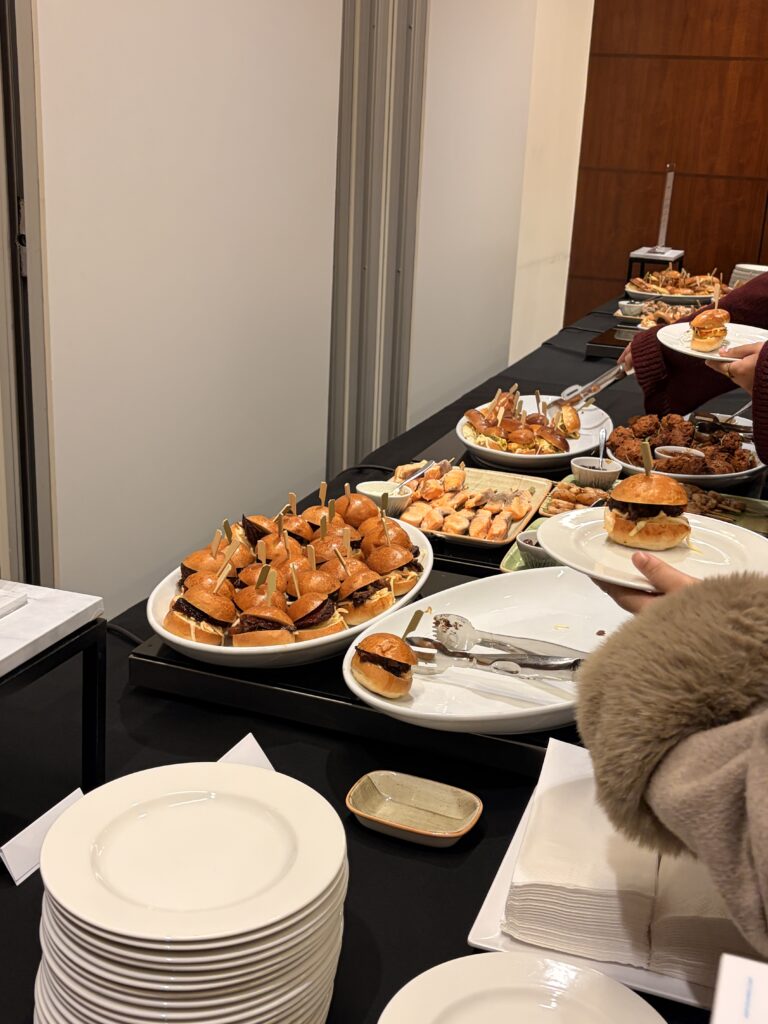
The evening concluded with networking over food, giving attendees a more informal opportunity to continue conversations and connect with others. Alongside advice about applications, the legal professionals spoke about the importance of choosing firms that align with your interests and priorities. We were encouraged not to feel pressured into following the same path as everyone around them, particularly in a profession where securing opportunities can sometimes feel like a race.
Rejection was another important topic. The panellists reminded us that not securing an opportunity with one firm does not determine whether they will become good lawyers. Different firms look for different qualities, and a rejection may simply mean that another opportunity is a better fit.
Ultimately, the event offered more than guidance on entering commercial law. It encouraged us to think about the kind of career we want to build and the environment in which we want to build it. For Muslim women considering a future in law, seeing others navigate the profession while maintaining their identities can be an important part of imagining that future for themselves.
Perhaps finding your place in law begins before your first day at a firm. It begins with understanding what you want from your career, recognising what you bring to it, and knowing that professional ambition and personal identity do not have to be mutually exclusive.