
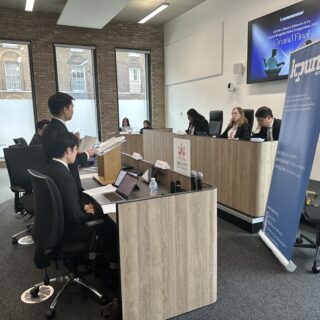
The City Law School has a long-standing relationship with Malaysian students and KPUM members (The United Kingdom and Ireland Malaysian Law Students’ Society—Kesatuan Penuntut Undang-Undang Malaysia di UK dan Ireland), many of whom have joined its Bar course over the years. In 2025, under the leadership of KPUM President and CLS BVS student Goviintha Krishnan, City became the first UK university to serve as an official sponsor of KPUM.
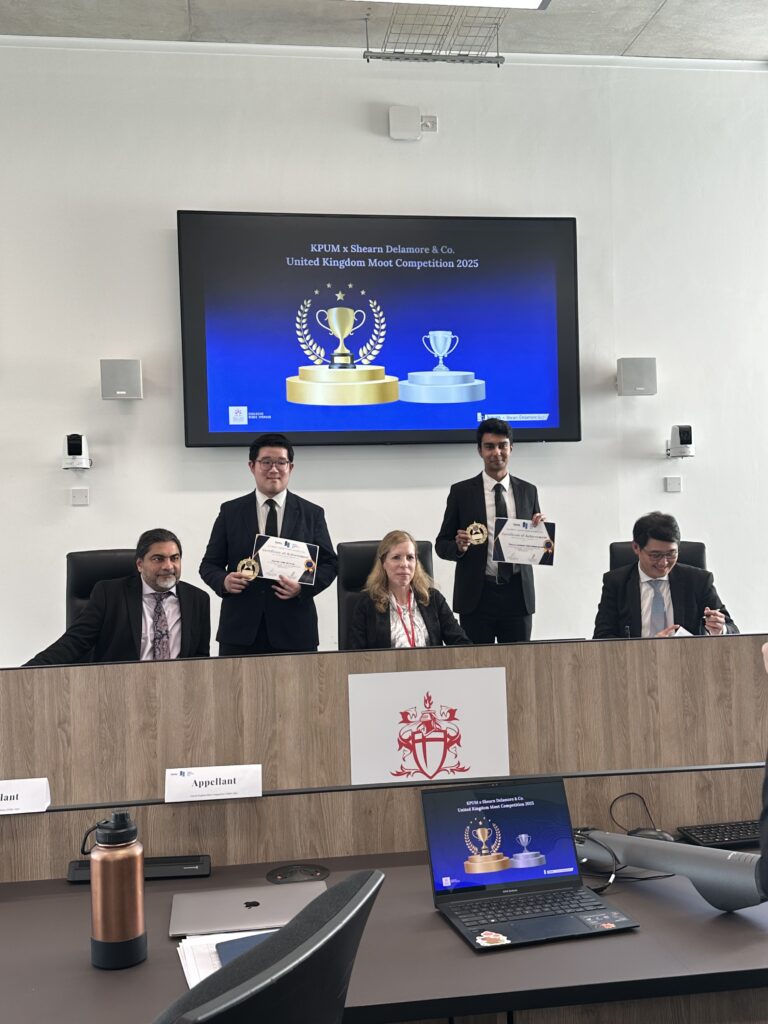
Since then, CLS has played an active role in KPUM’s activities—from hosting the KPUM Moot alongside Shearn Delamore to participating in law fairs, virtual events in Kuala Lumpur, and employability panels with Malaysian firms. This ongoing engagement reflects a shared commitment to supporting aspiring Malaysian lawyers.
KPUM has brought together Malaysian law students across the UK and Ireland for over 20 years. Established in 1979, it represents students from more than thirty institutions, and provides opportunities for connection through careers events, networking, and engagement with Malaysia’s legal landscape.
In March 2025, CLS hosted the KPUM Annual Moot, with BVS Director Anna Banfield serving as a judge in the final round. You can read more about last year’s moot via the City Law Forum. The partnership continues this year, as CLS looks forward to welcoming KPUM again on Friday, 27 March 2026 for its flagship Moot, with Anna Banfield returning as a judge.
In advance of the moot, we fire a few questions at Anna below:
As a now established judge in the annual KPUM Moot, what do you always most look forward to?
I’m looking forward to seeing high standards in the presentation and quality of legal argument from the finalists. As undergraduates, none of these students have had formal training in advocacy and I am always impressed by their skill and understanding of complex legal principles.
Mooting is a simulated legal appeal so students are required to present arguments on points of law which would be made to an appeal court judge. In addition, they must answer questions from the judges which requires them to think on their feet. The standard of the finalists in this competition is very high. They have demonstrated advanced analytical and communication skills which are highly valued by the profession.
For students who are interested in mooting but have yet to try, what tips would you give them to get them started?

Any form of advocacy starts with good preparation. Students interested in mooting need firstly to work on their legal research and case analysis skills so that they can identify relevant legal arguments supported by authority.
They should also take every opportunity to practise public speaking to increase confidence. Most university law departments have internal mooting competitions which are a good starting point for those who may never have mooted before.
Studying the Bar course at The City Law School is a long and valued tradition for many Malaysian lawyers. As Programme Director, could you tell us a little about the City–Malaysian connection? And what does it mean for City St George’s to host this prestigious final?
The City Law School has had strong links with the Malaysian community for many years. Members of the senior leadership team from City regularly visit Malaysia to foster relations and learn more about what firms are looking for in the lawyers of the future. It is a great honour for us to host the KPUM mooting final where talented students can showcase their ability and network with other students and firm representatives.
Many of the students competing in the KPUM moot will be starting City’s Bar course- a notoriously demanding qualification- in September. As Director of the programme, what advice do you give students on how to prepare for this rigorous year? And how can students make the most of studying law here in the heart of legal London?

We are delighted that so many Malaysian students choose to study the Bar Vocational Studies programme at City. The BVS is an intensive and challenging post graduate programme. To succeed, students need to develop a good understanding of legal and procedural principles and be able to apply them to complex factual scenarios. They need to be organised, keep on top of their work and implement feedback in relation to their oral and written legal skills.
There is no specific reading or preparation required before commencing the course, but we do recommend brushing up on the law of contract and tort if students have not studied these recently.
Studying in the heart of legal London means that students have easy access to the Inns of Court and a wide range of chambers who may offer mini-pupillages.
Ending on a lighter note: what do you think is the most underrated quality of a great advocate?
I’d say that awareness of your judge is an underrated quality. If you ask the judge to turn to a page in the bundle, wait for them to find it before making your submissions. They will be able to concentrate fully on what you are saying rather than hunting for the paragraph you have referred them to.